A textile-based narrative
India was divided in 1947 into two countries and Pakistan was formed. There have been four Indo-Pak wars since partition. Cross-border firing, cease-fire violations, and enemy infiltrations are not new to the Line of Control. A Step On The Line is a textile-based narrative, a story by a daughter whose father served in the Indian army for 35 years. I often heard officers talk about incidents at the border, and news reports were a great source of information too. This information found a permanent place in my memory. These memories evoke patriotism, empathy, and pride.
My thesis is an integration of elements that I have gathered for so many years. I bring memories associated with my father and my upbringing to fabric and give them a permanent place to be. My memories transform, and become tactile, visual, portable, emotional, and durable.
Evidence
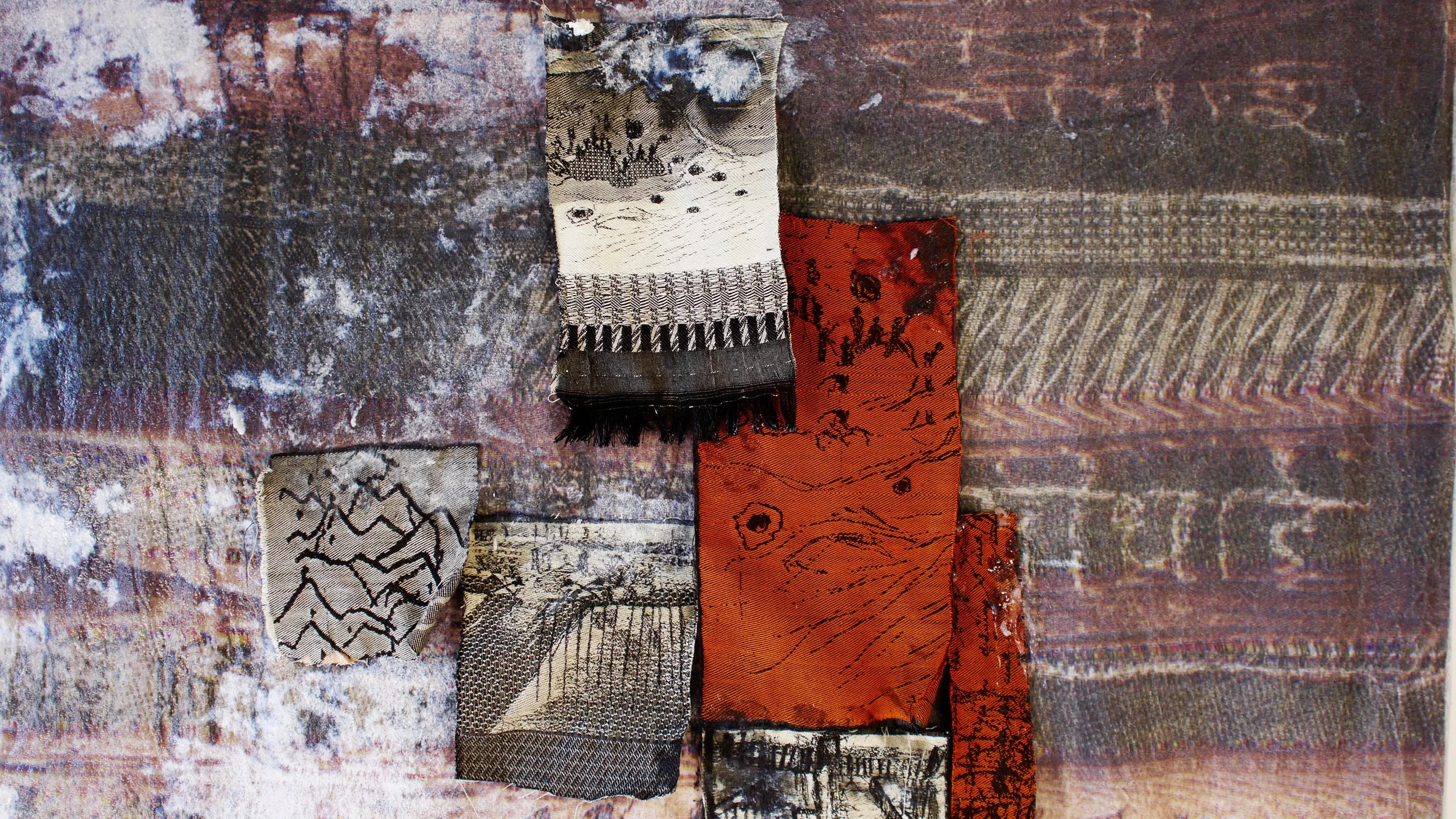
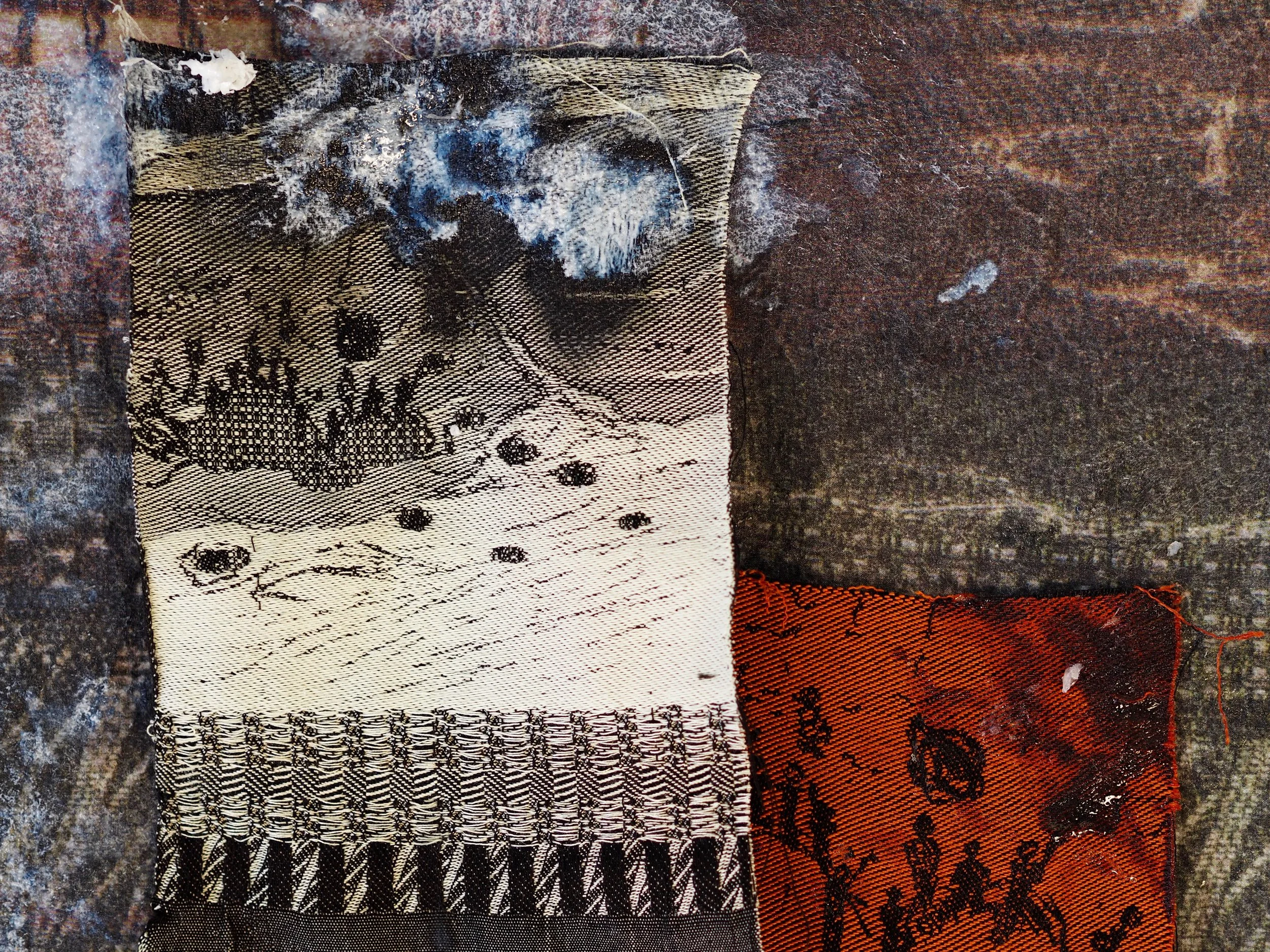
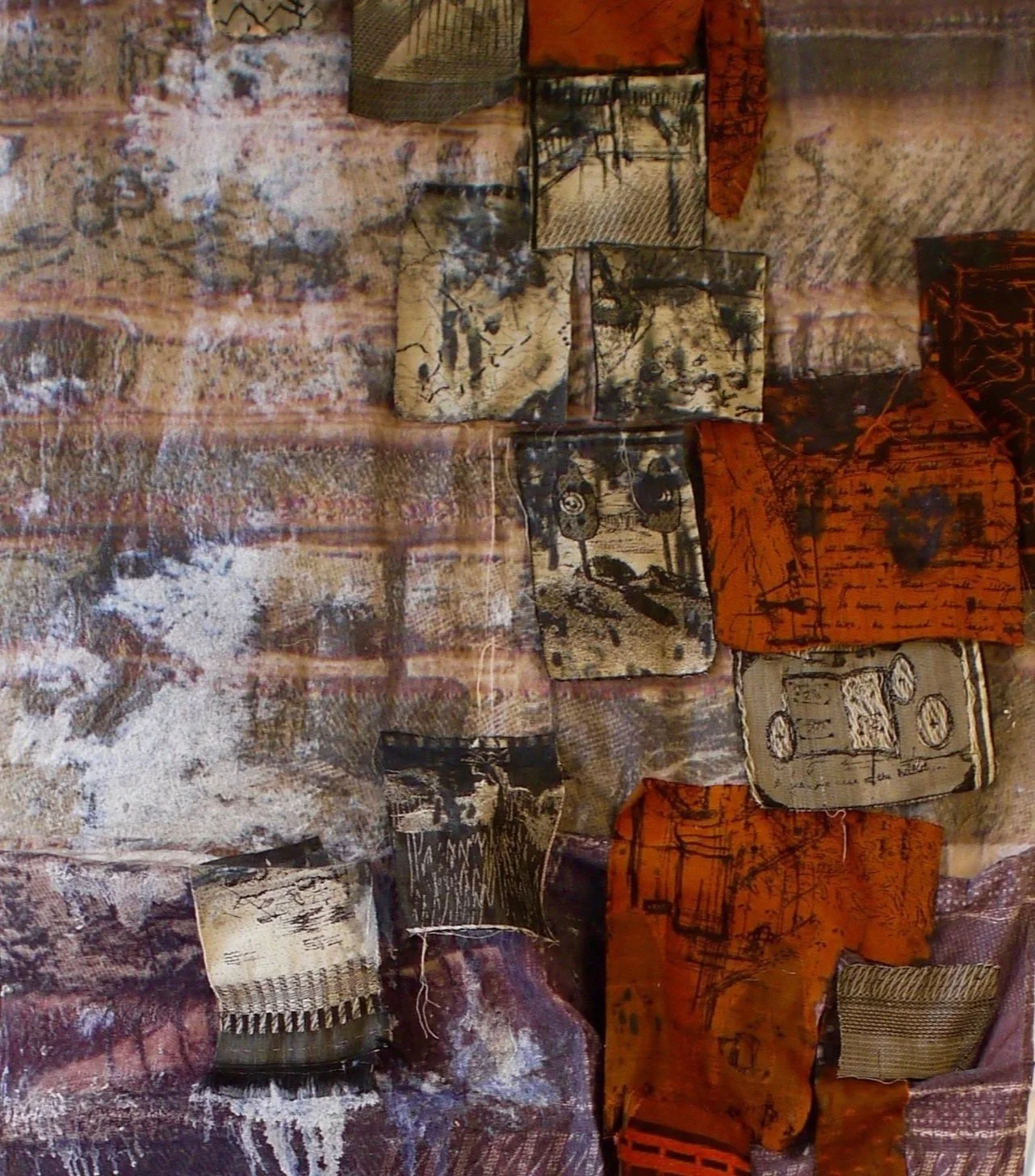
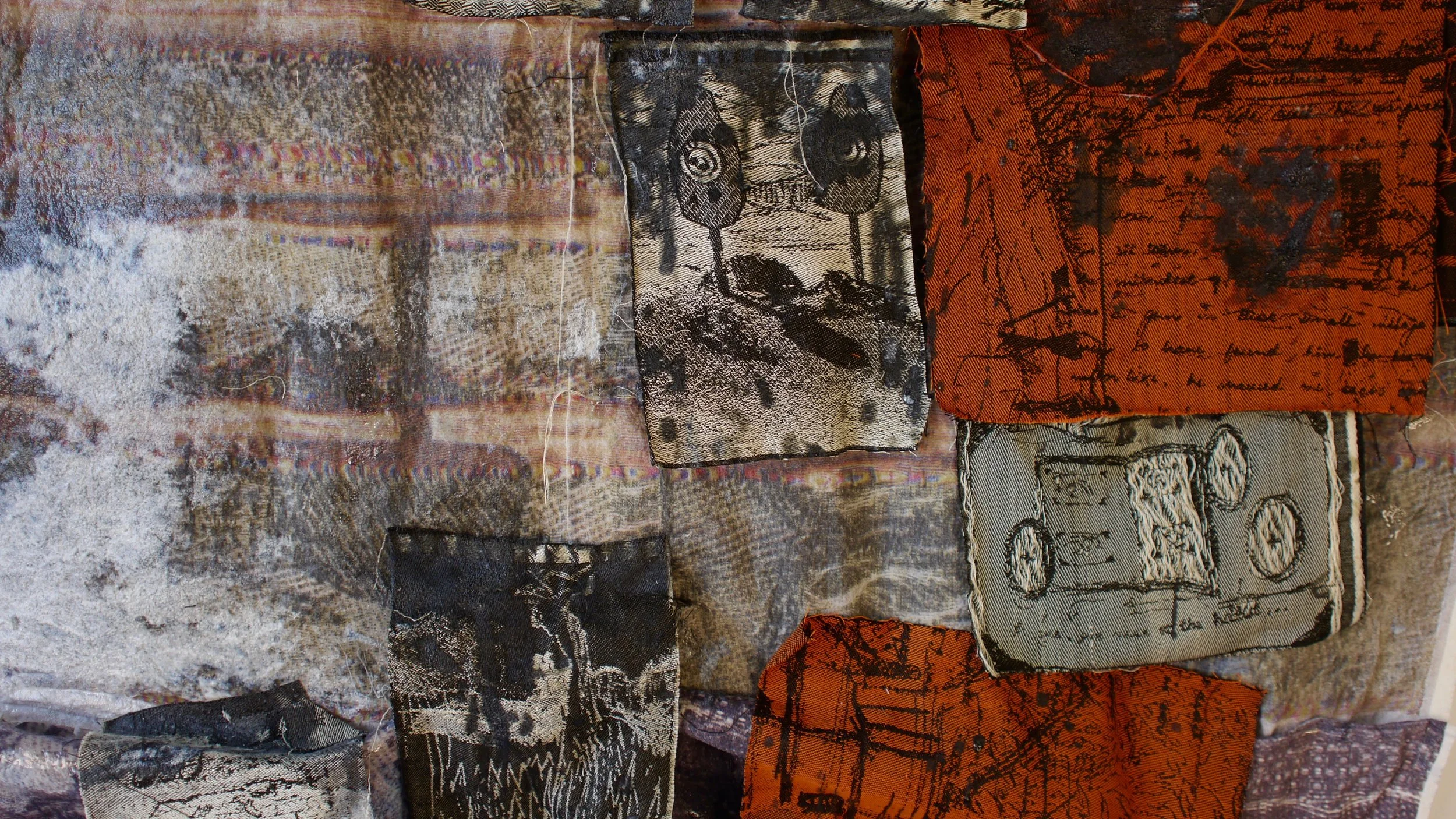
EVIDENCE, 2016, PIGMENT & RESIN ON COTTON (11.2 ft X 3.75ft); Thoughts oscillate, memories flash, I fluctuate between reality and imagination. I grew up listening to a lot of stories from my parents like children often do. Stories about princesses, jungles, fairies, and heroes. Some of these stories stayed with me. They continued to grow, take new turns, angles and perspectives. These were stories of my father who fought real wars, of my father and men like him who emerged heroes, every time. These narratives came to me as auditory information and I mentally visualized them in various landscapes and sites, seen or unseen. I haven’t visited most places or met most people, but I have lived the story itself. How I visualize these scenes is probably very different from how you visualize them and how they were in reality. My illustrations are inspired from these stories. They are a transfer of my memories into visual form. I take these illustrations forward by transposing them into textiles to make them tactile, emotionally active and stimulating. They attain dimensionality and endurance. Years later, as I illustrate my fragments of memory, I think about them differently, hopefully more rationally. Nevertheless, it is the little military daughter who draws these memories, embraces them and wants to preserve them. There are some that have frozen with time and form a permanent place in my mind, there are others, still exposed and sensitive to the happenings of today.
Guarding
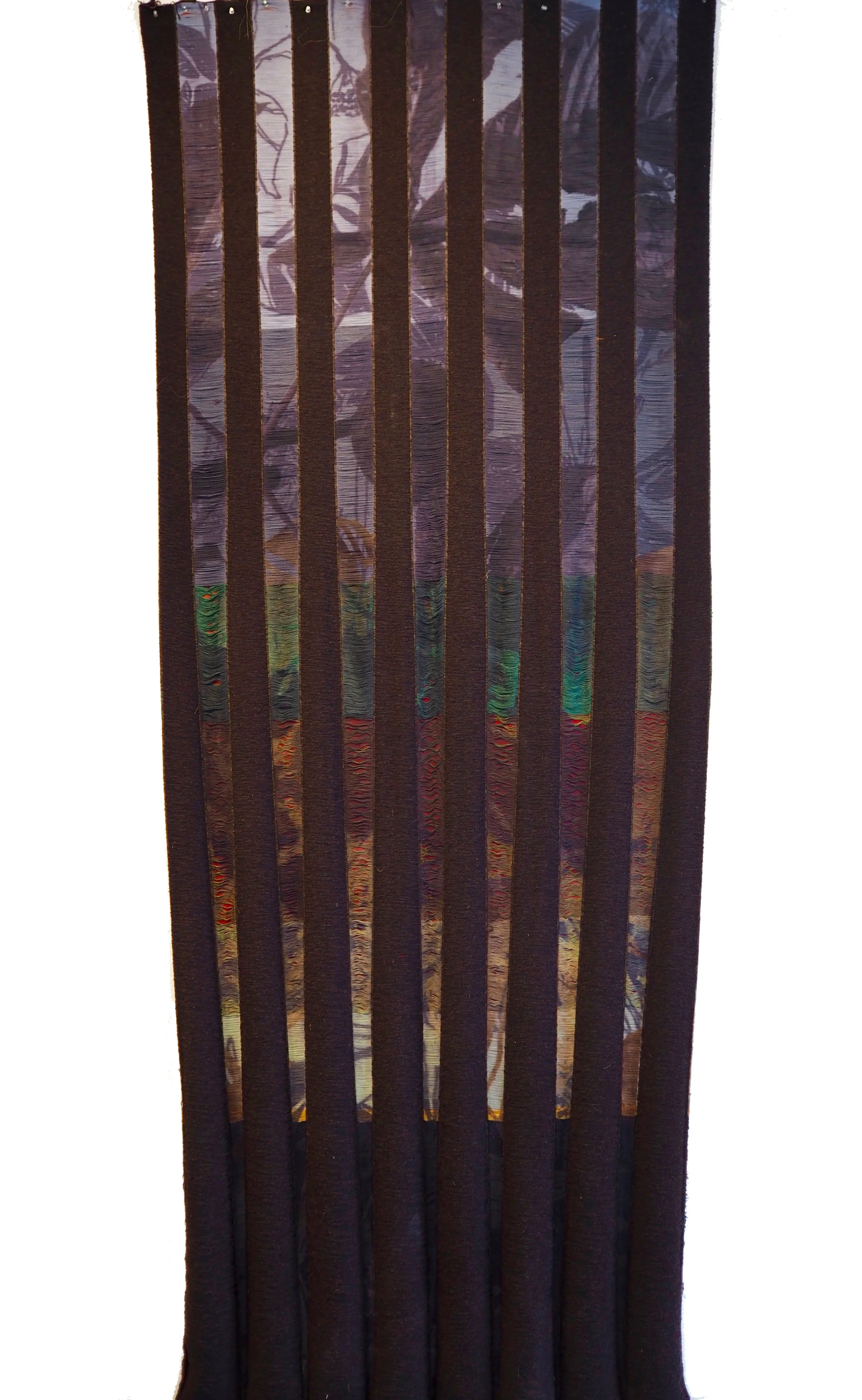
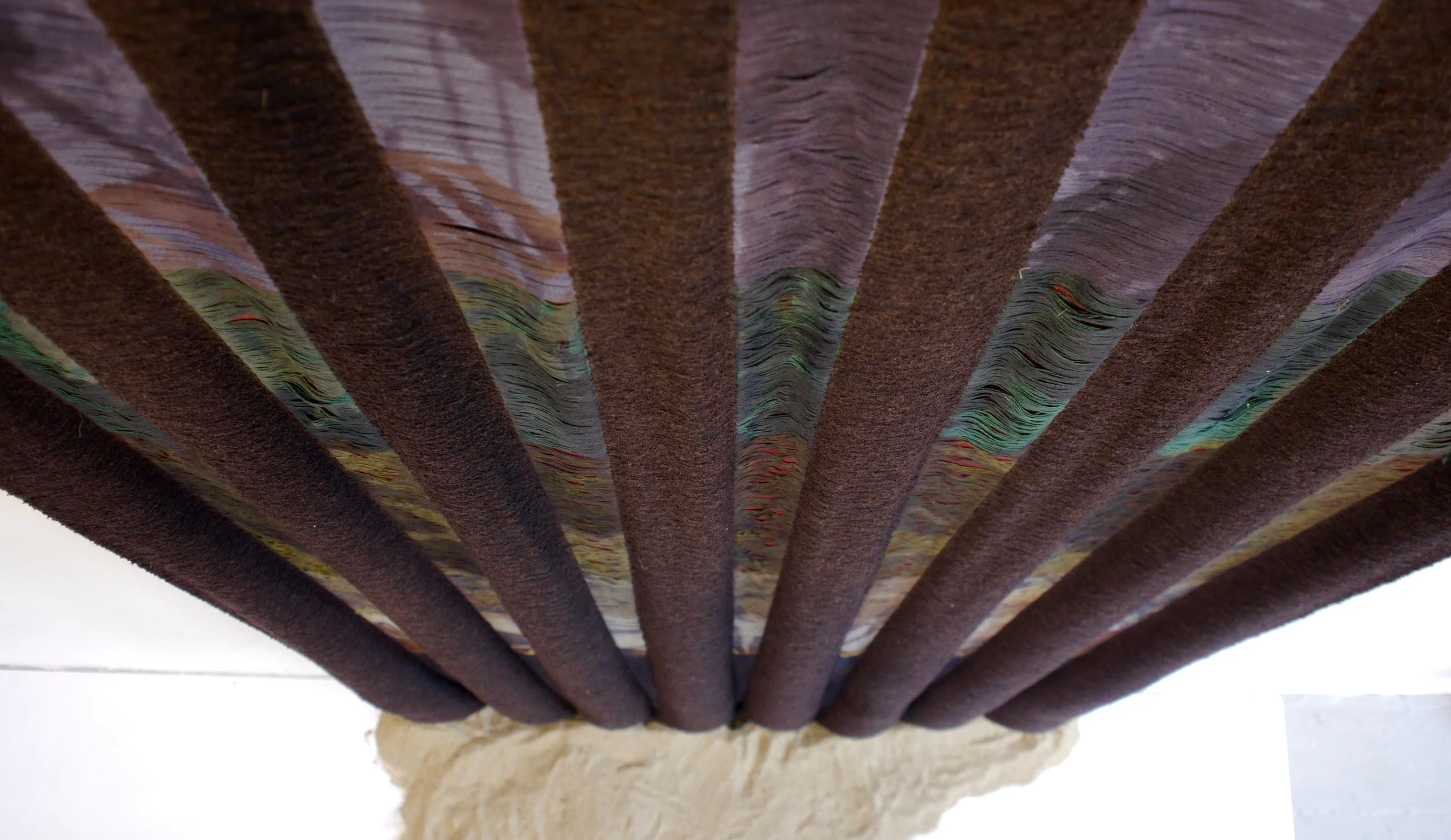
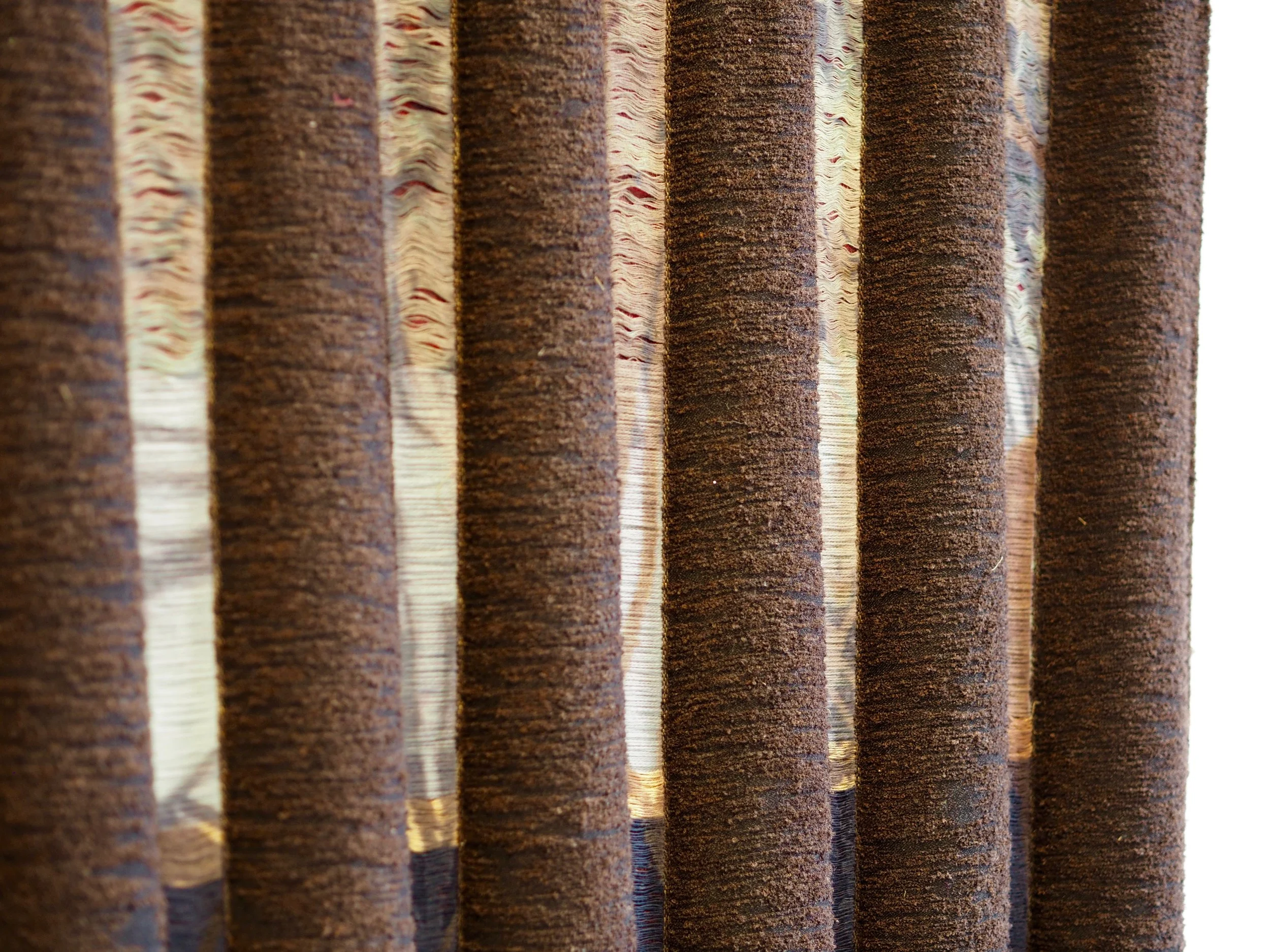
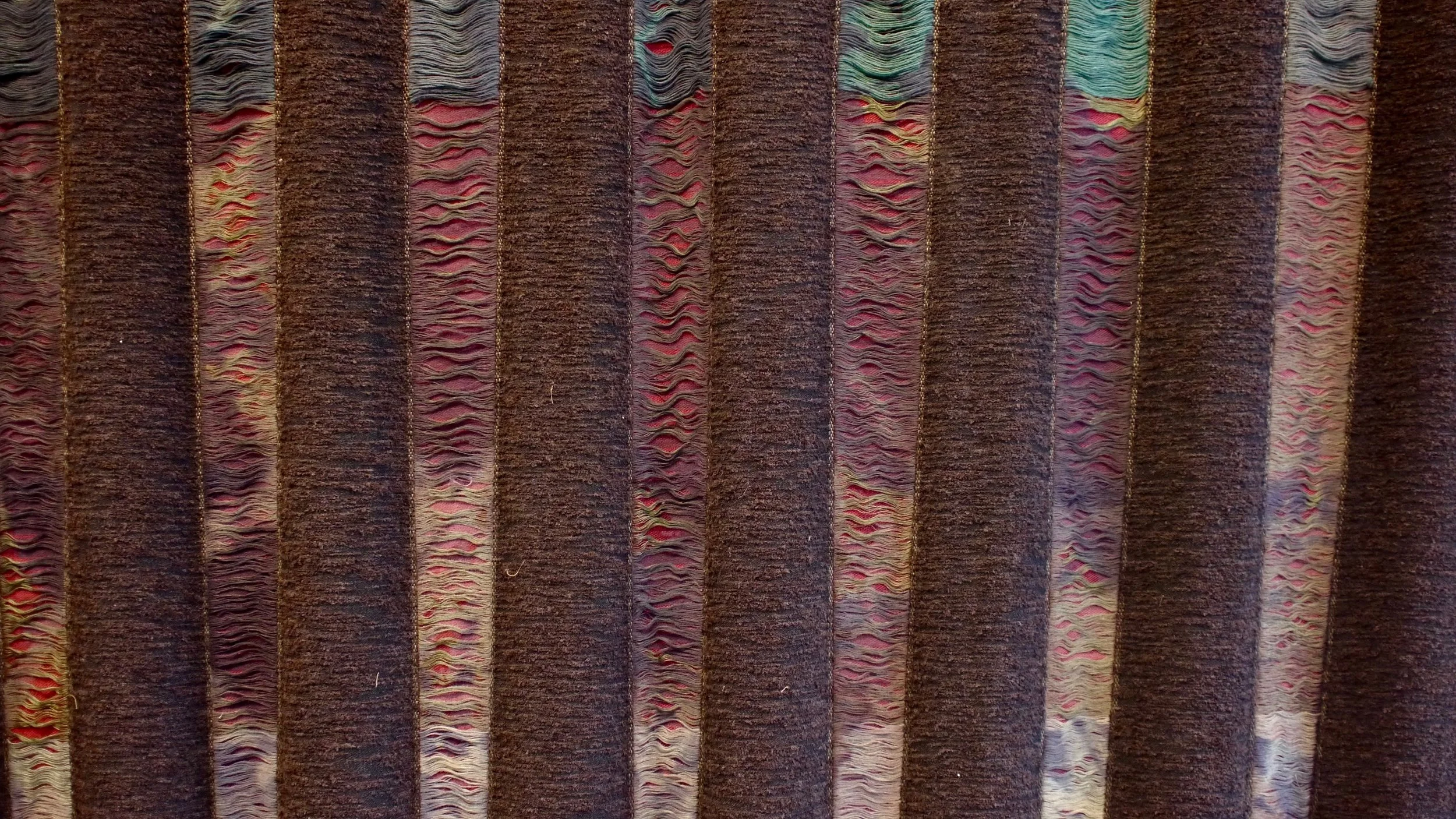
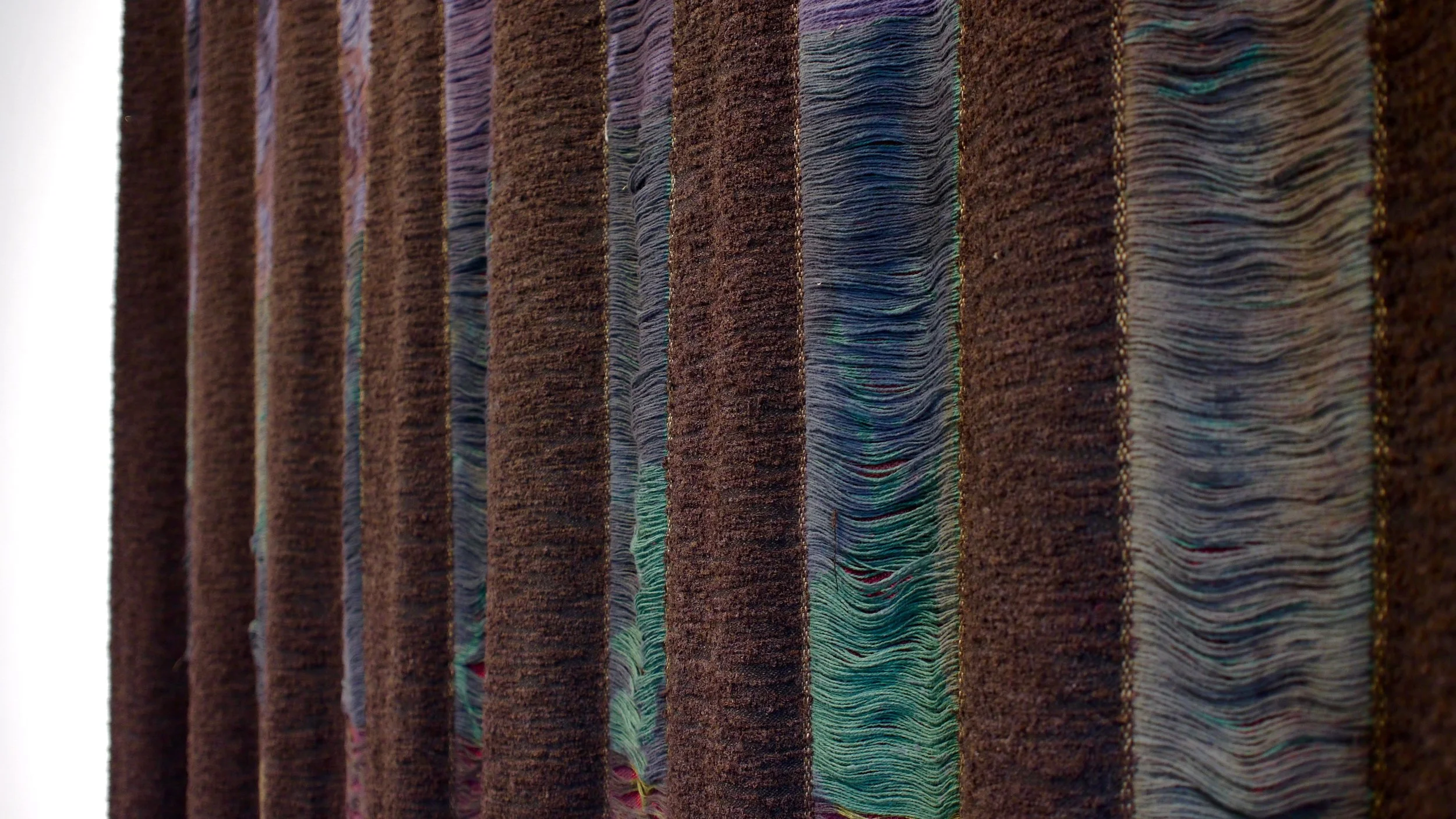
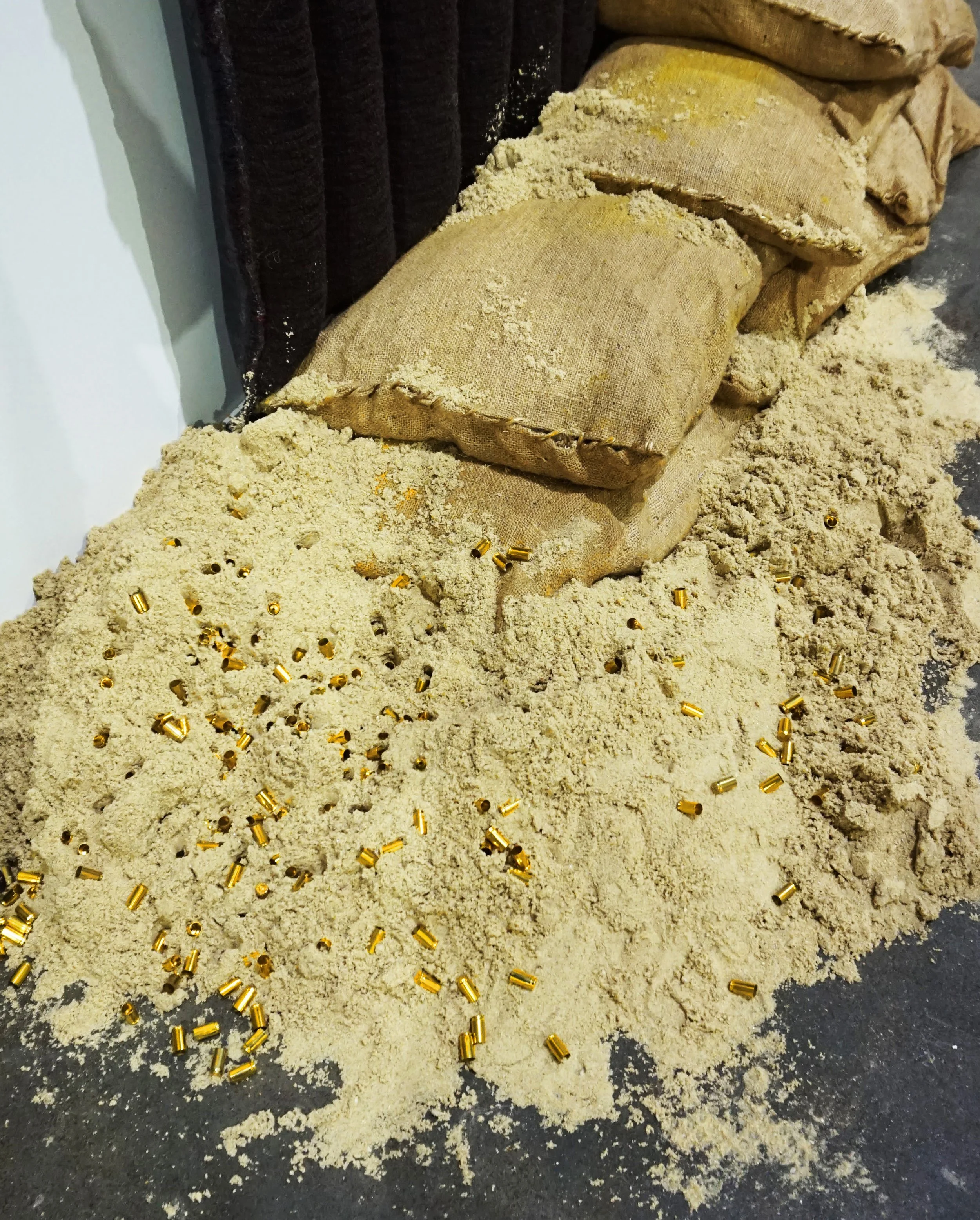
GUARDING, 2016, PIGMENT, COTTON, WOOL, ACRYLIC & SAND (10 ft X 4 ft); As I kept scrolling through the pictures of my Tangdhar trip, I noticed an object that kept reappearing, tacked in front of the soldiers on guard, thrown on tin rooftops, sitting under my arm while I was firing, resting in water when I crossed a stream to take a picture on a rock, or simply lingering anywhere I walked. The sandbag showed its presence so very often. In my eyes, the Indian soil and Indian soldiers share something in common. On one hand, protecting “Mere desh ki “mitti” (my country’s soil) is a soldier’s ultimate undertaking, so the soldier is protecting the land and the soil; on the other hand, sand filled in bags, along with rocks and boulders, have often been used as shields, so the soil and land protect men from bullets and bombshells. They play a reciprocal role. This beautiful relation of “I protect you” and “you protect me” inspires me to use threads to paint a landscape. A landscape that has danger hidden in each fold and layer. A landscape that is protected. Threads shift in color from darker greys to greens to atmospheric greys and move to and fro in a quality ranging from fibrous wools to refined twisted cotton, illustrating the shift in landscape and variety in vegetation. The weight of the stuffed fabric creates a natural tapering bottom as if it were a real fence in perspective. This cloth is woven with delicate threads, but its construction is strong enough to sustain more than 60 pounds of weight in its arms, just like the unbreakable protection created by every single soldier in ambush. The landscape continues to be guarded. It will so remain until the sun rises from the west. These stories will grow buds in many other little ones of the family, will remain with some, and inspire some.
Decapitation
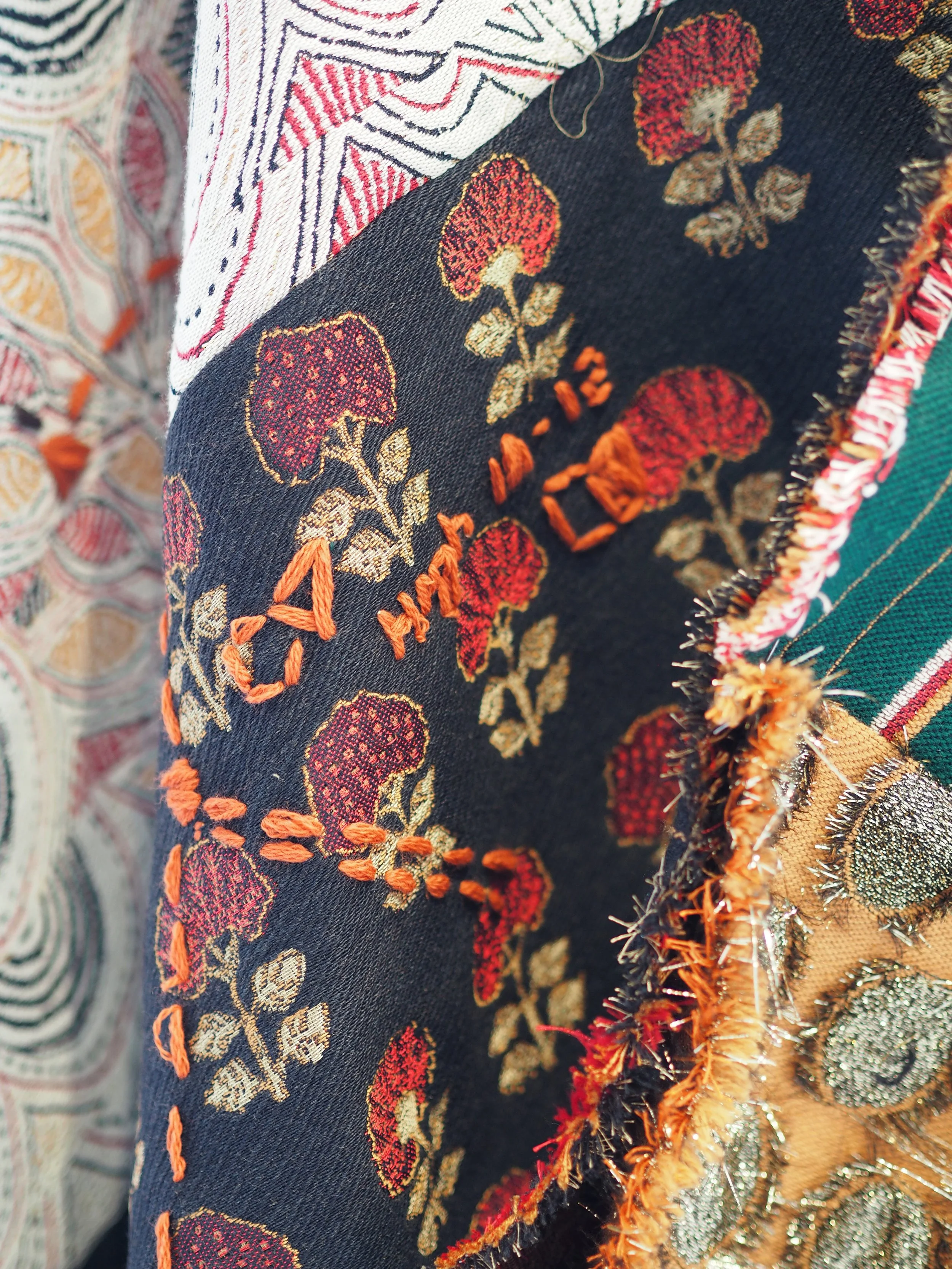
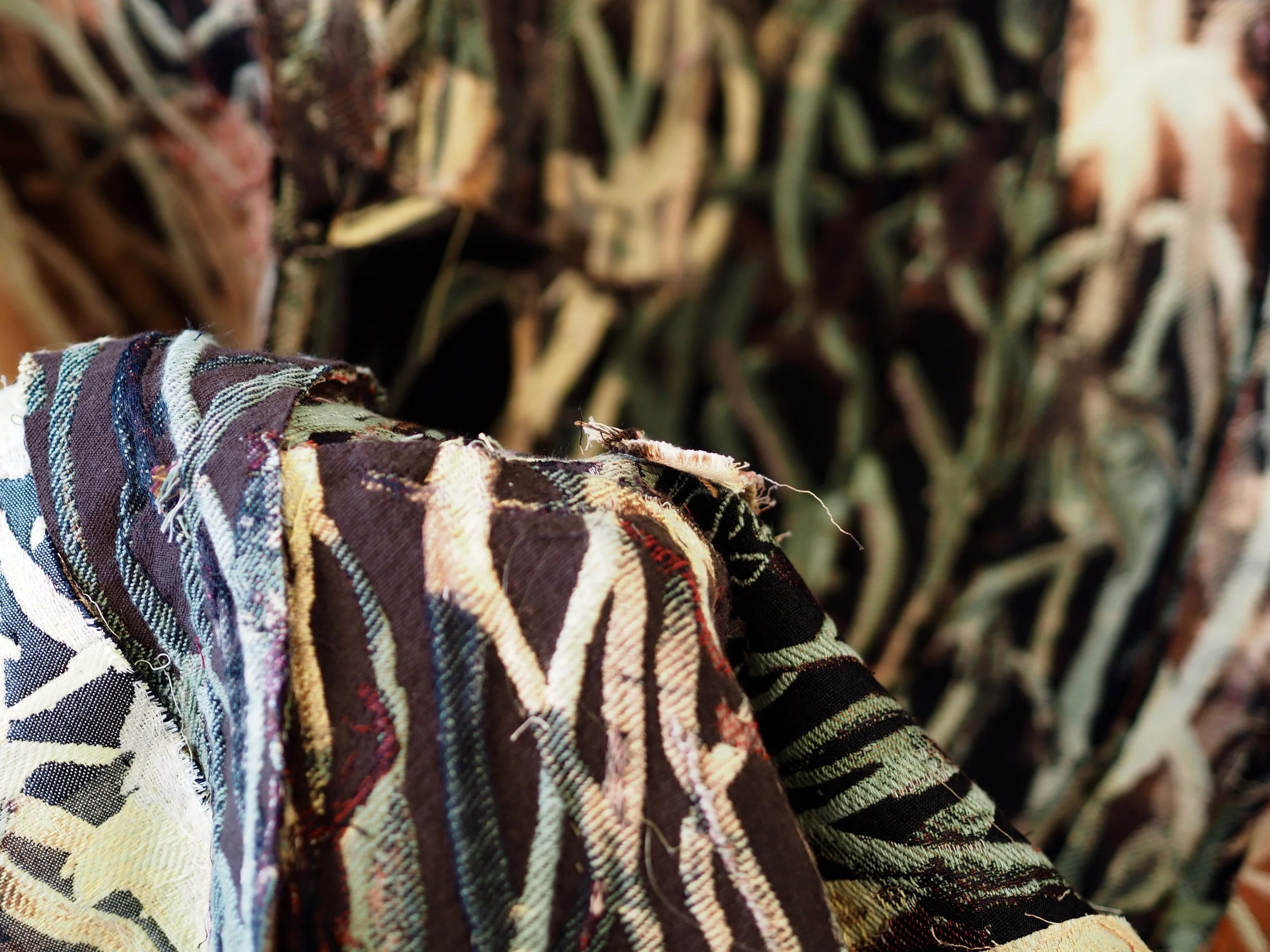
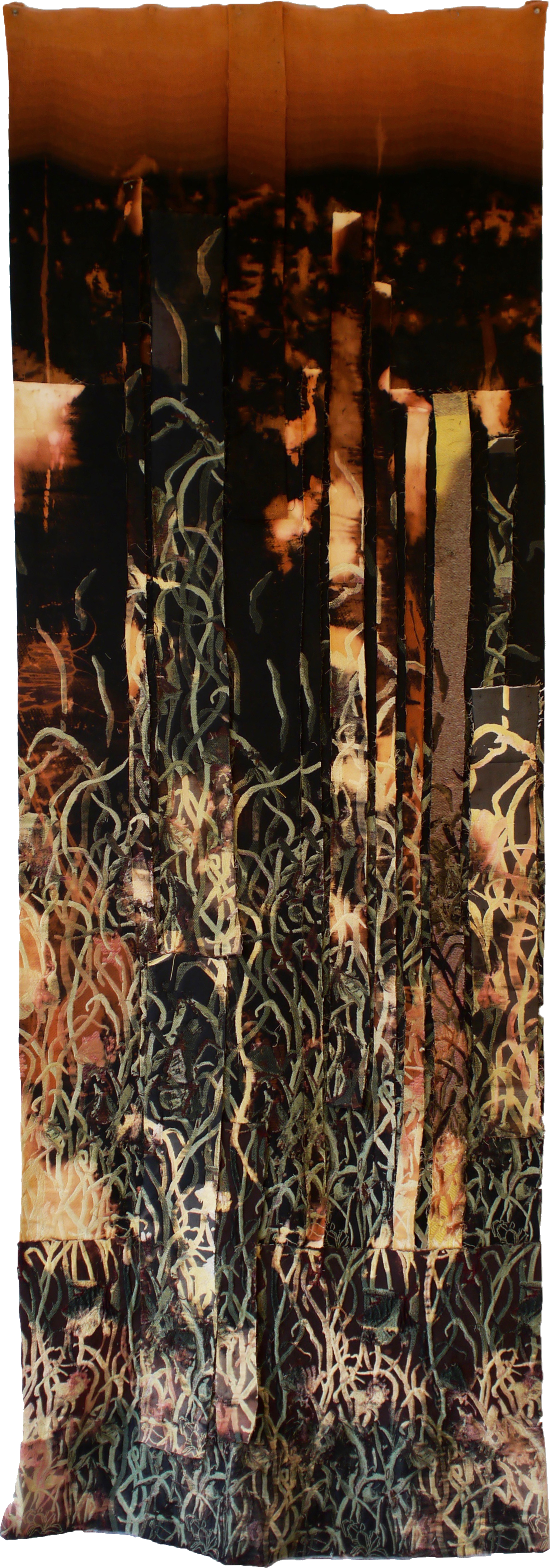
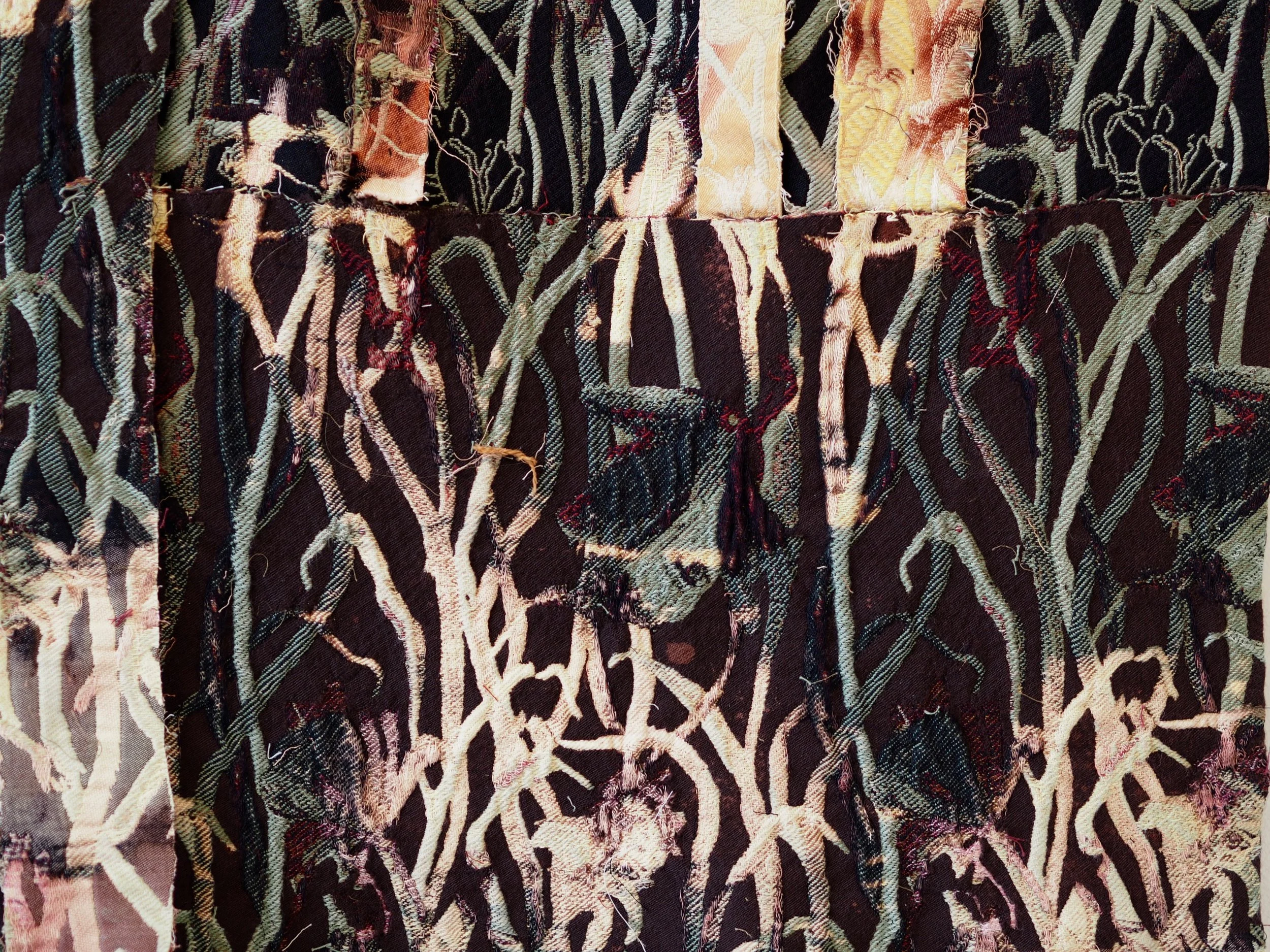
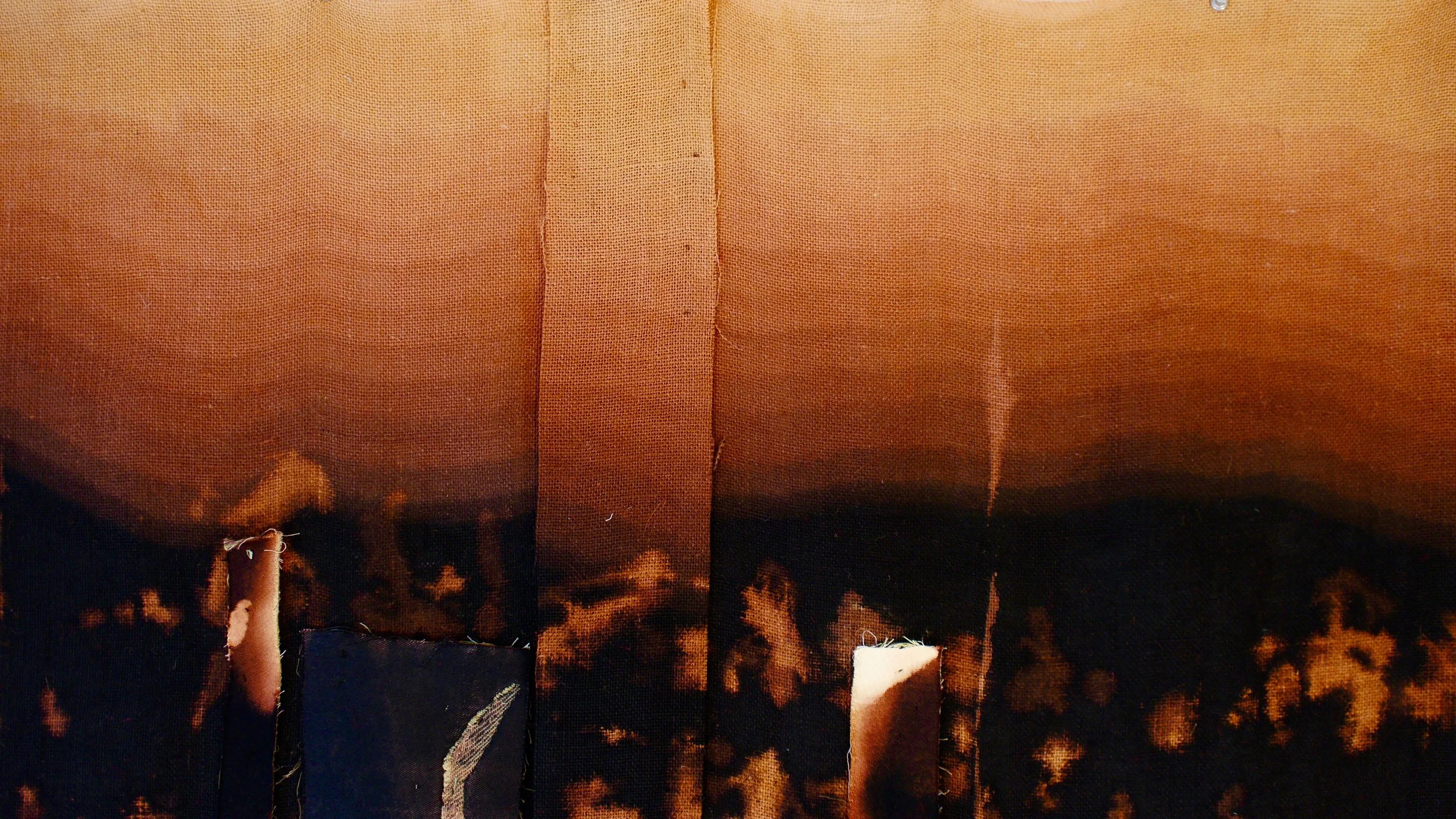
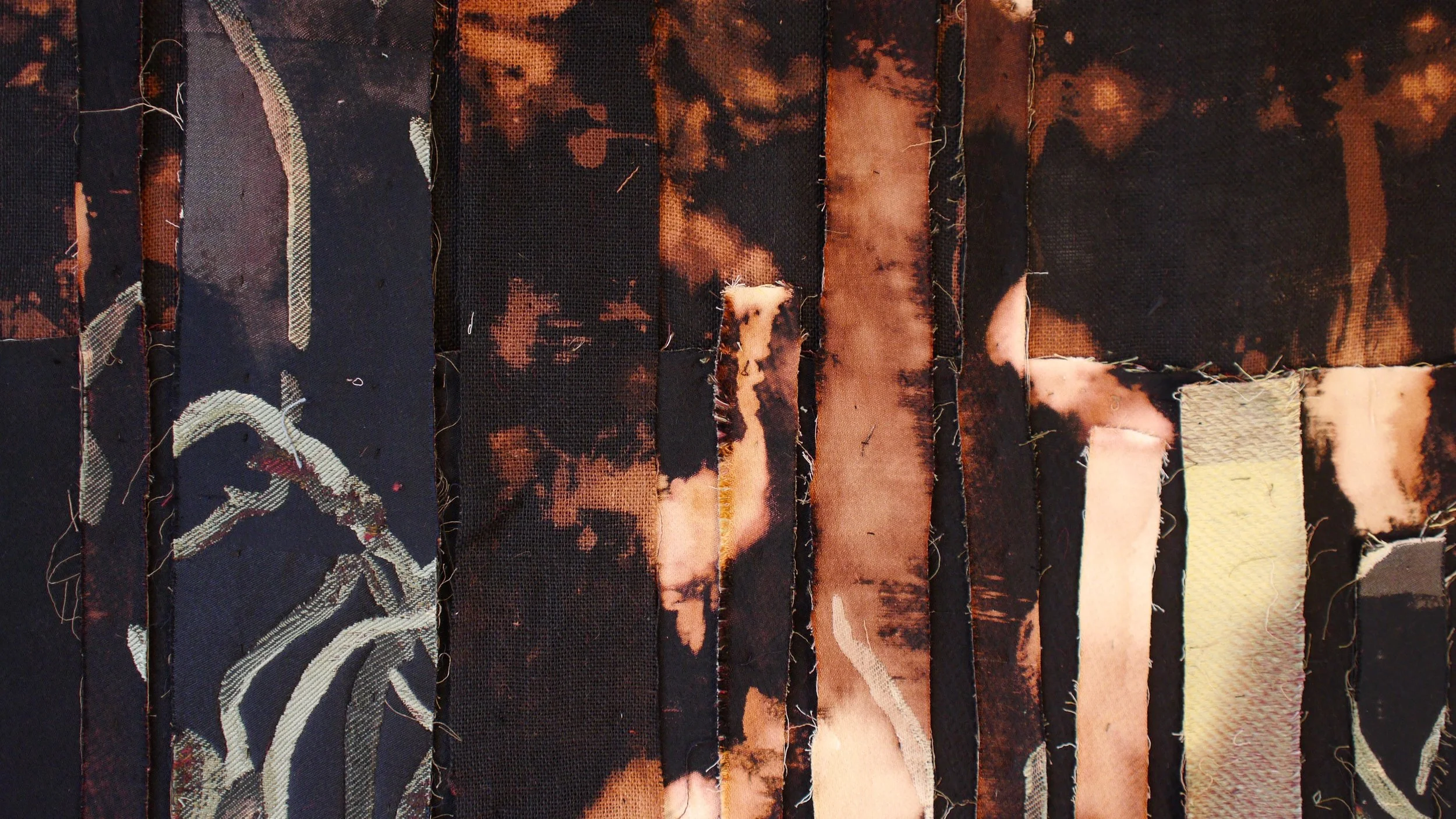
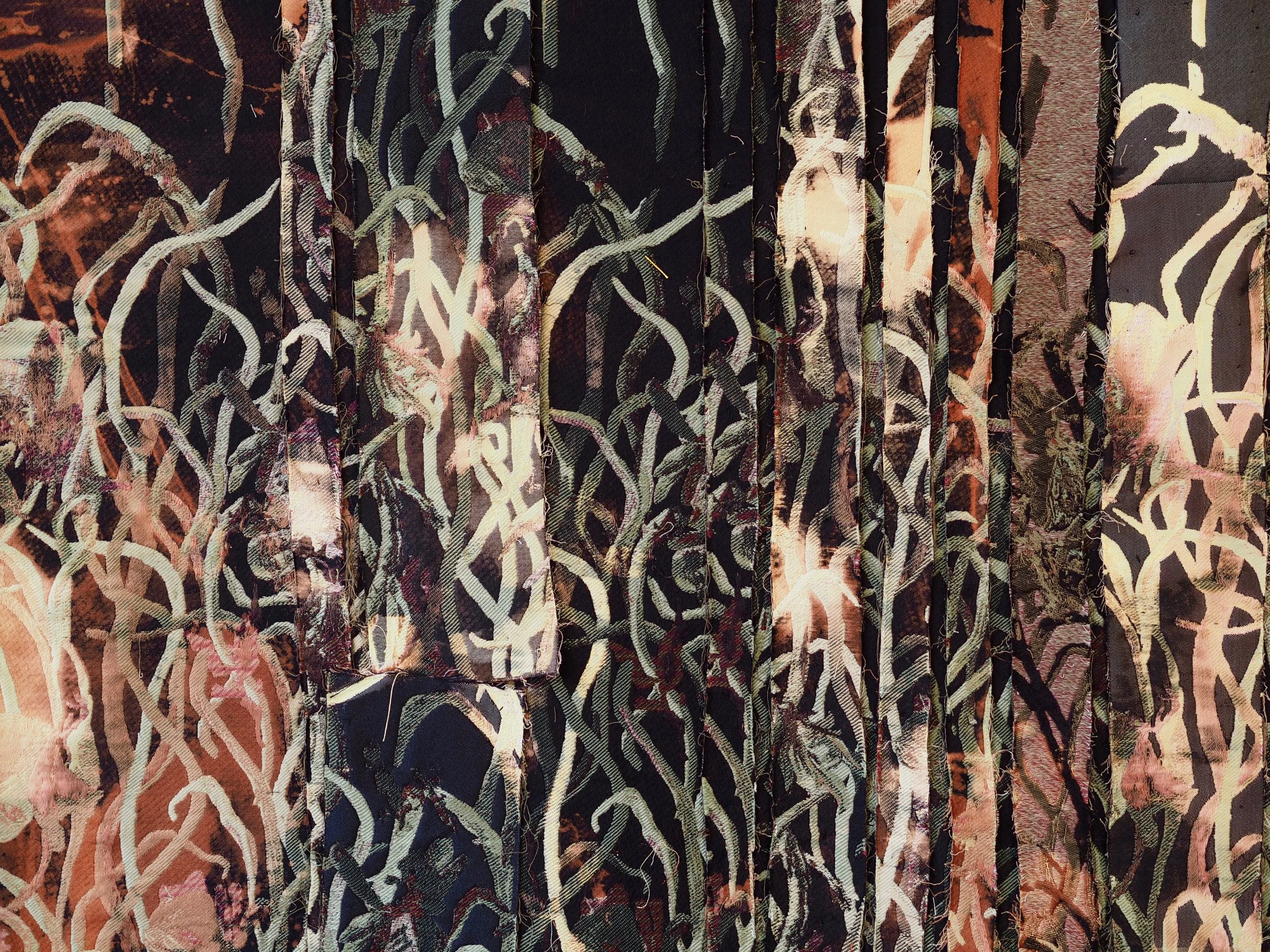
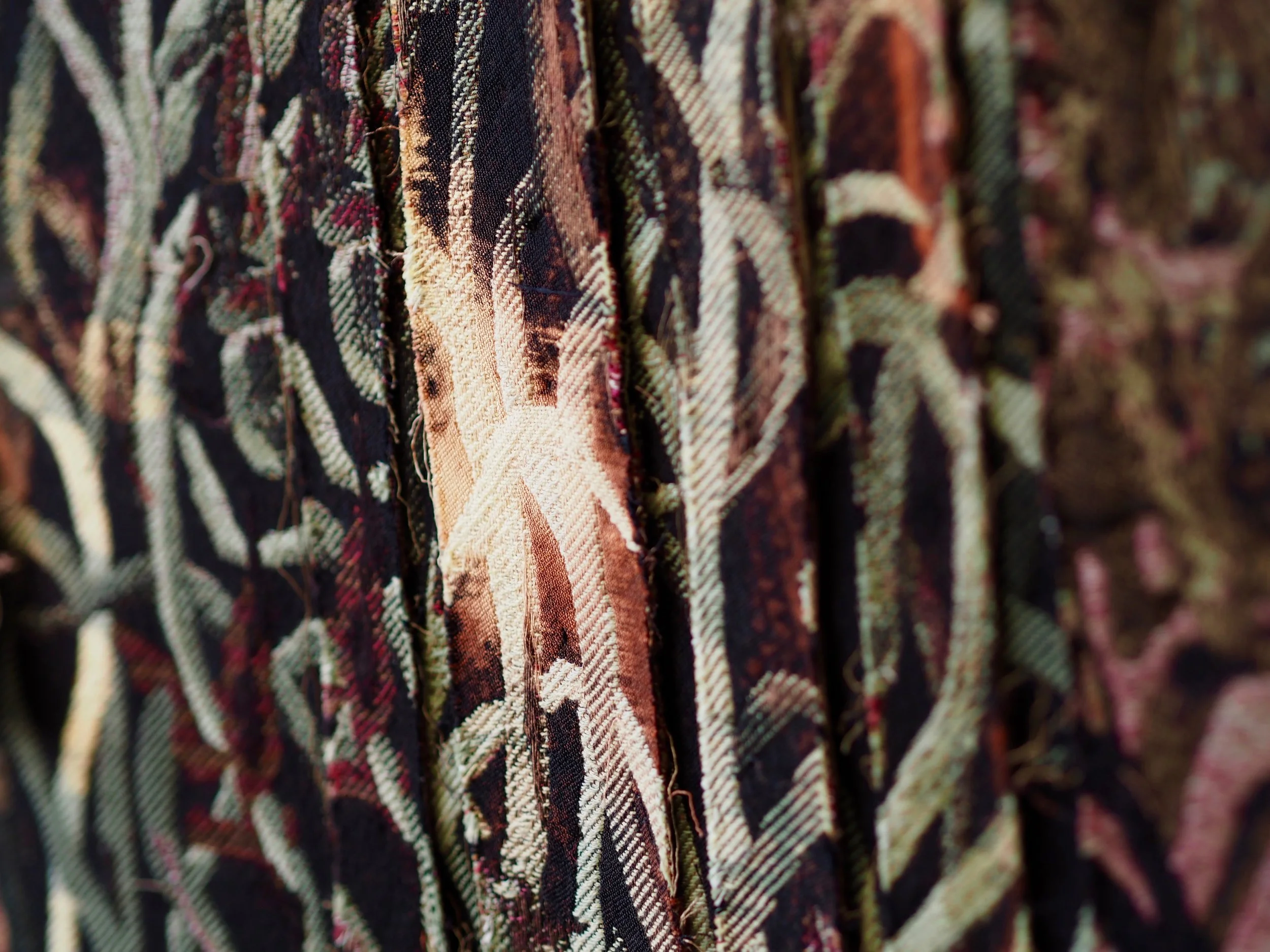
DECAPITATION, 2016, JACQUARD WOVEN COTTON, WOOL AND ACRYLIC(10.5 ft x 3.2ft); Decapitation is a Jacquard woven piece. This piece is narrative and metaphorical, relating to incidents of beheading that take place on the line of control every few years. This artwork illustrates a garden that has been uprooted and set to destruction in the dark night. These plants have overgrown so much it feels almost uncomfortable. As a part of my process, I create these illustrations while going back and forth between viewing to news clips about these incidents and interviewing my father. The news articles and interviews thus become a way of processing my subject matter.
Jacquard weaving helps bring to life this imagery due to its inherent repetitive quality and dimensionality. This cloth is subjected to after treatments of discharge. The carefully selected threads that interlace to weave this fabric demonstrate strength and durability even after undergoing harsh treatments of chemicals. It is symbolic of the strength and courage of these soldiers. This work pays homage to those who lost their lives in these terrible incidents. It is also a reminder to those sitting on the Chair, to take a call towards peace - Aman Ki Asha (Hope for peace).
Combat
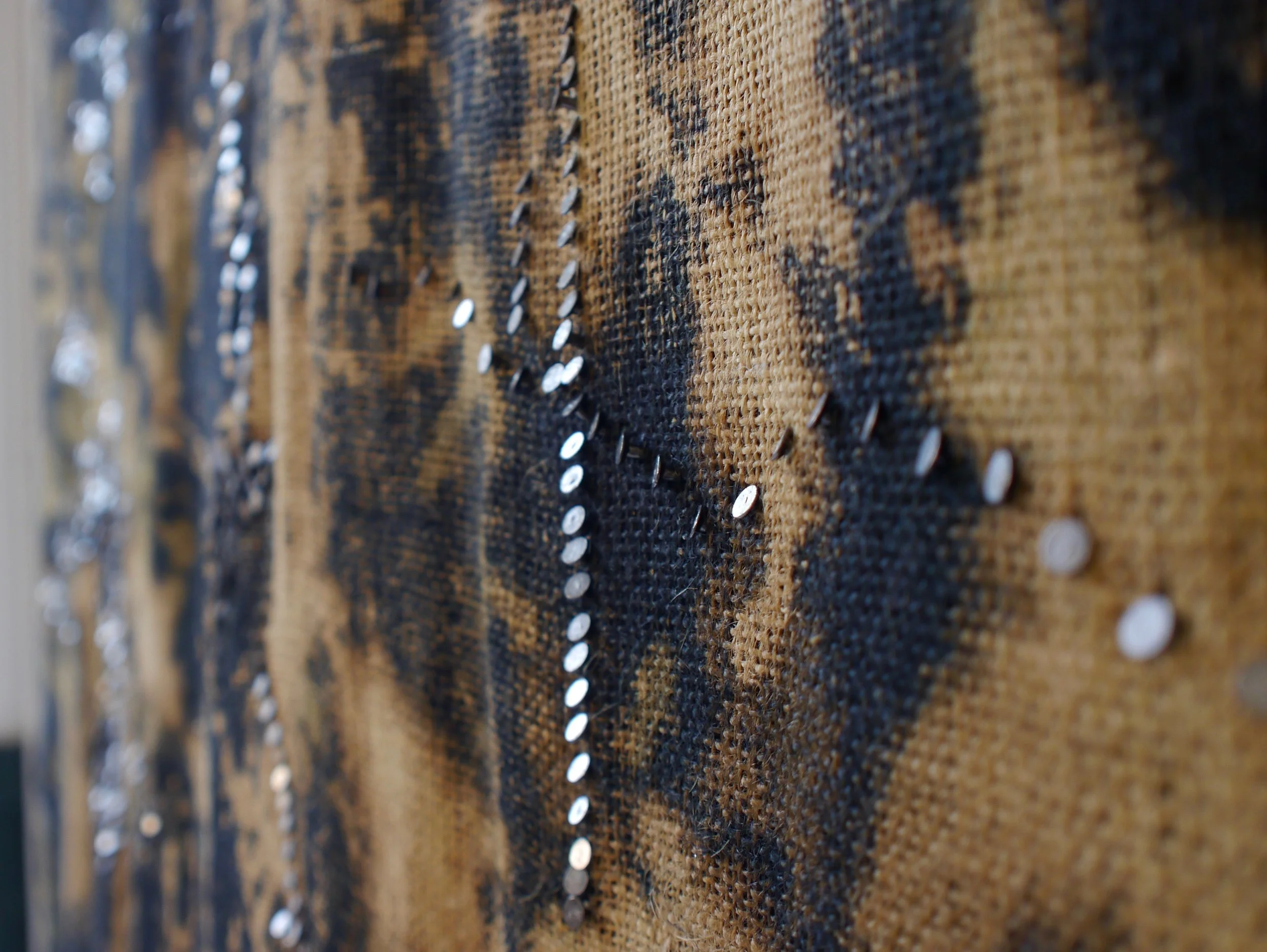
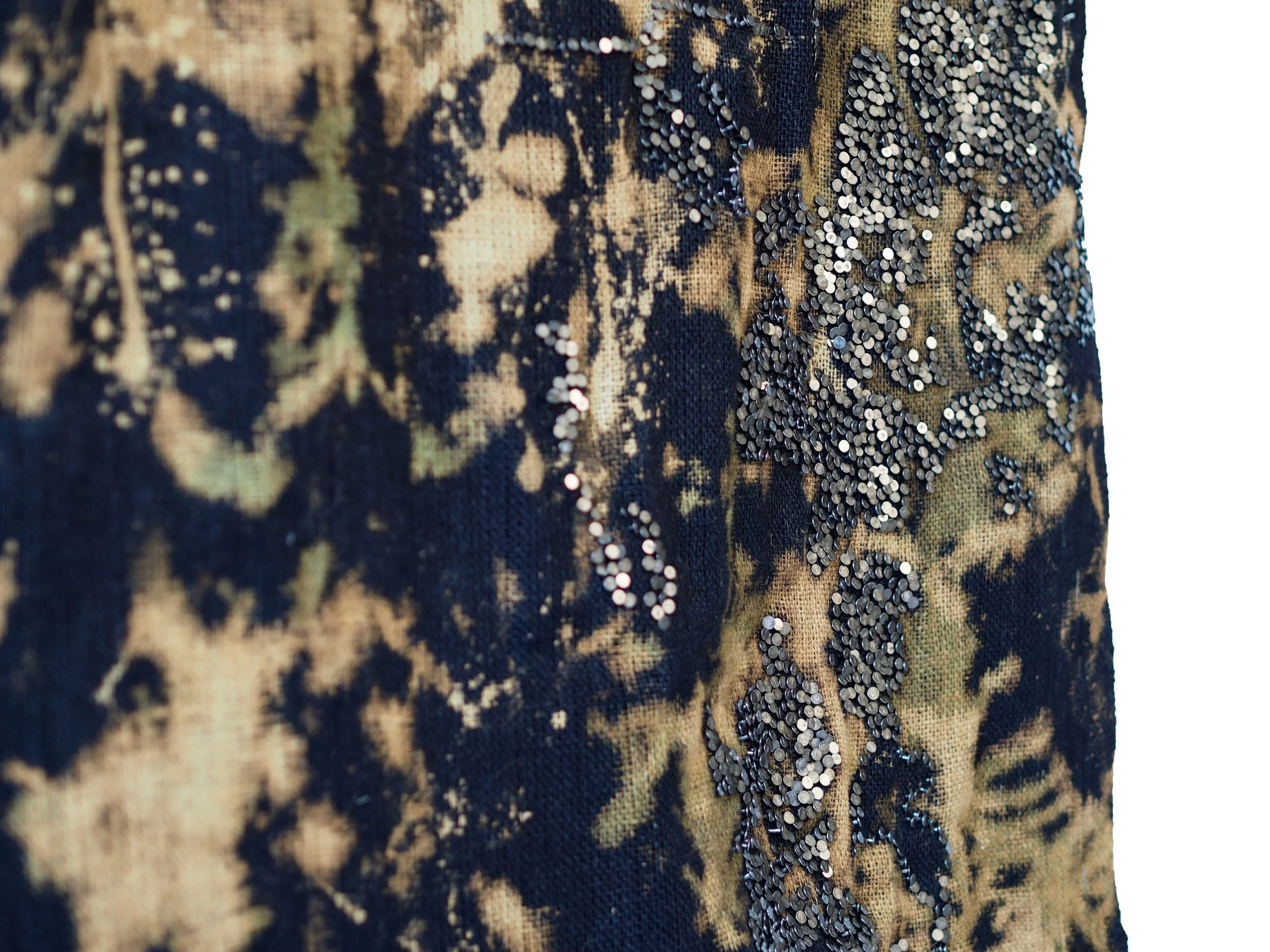
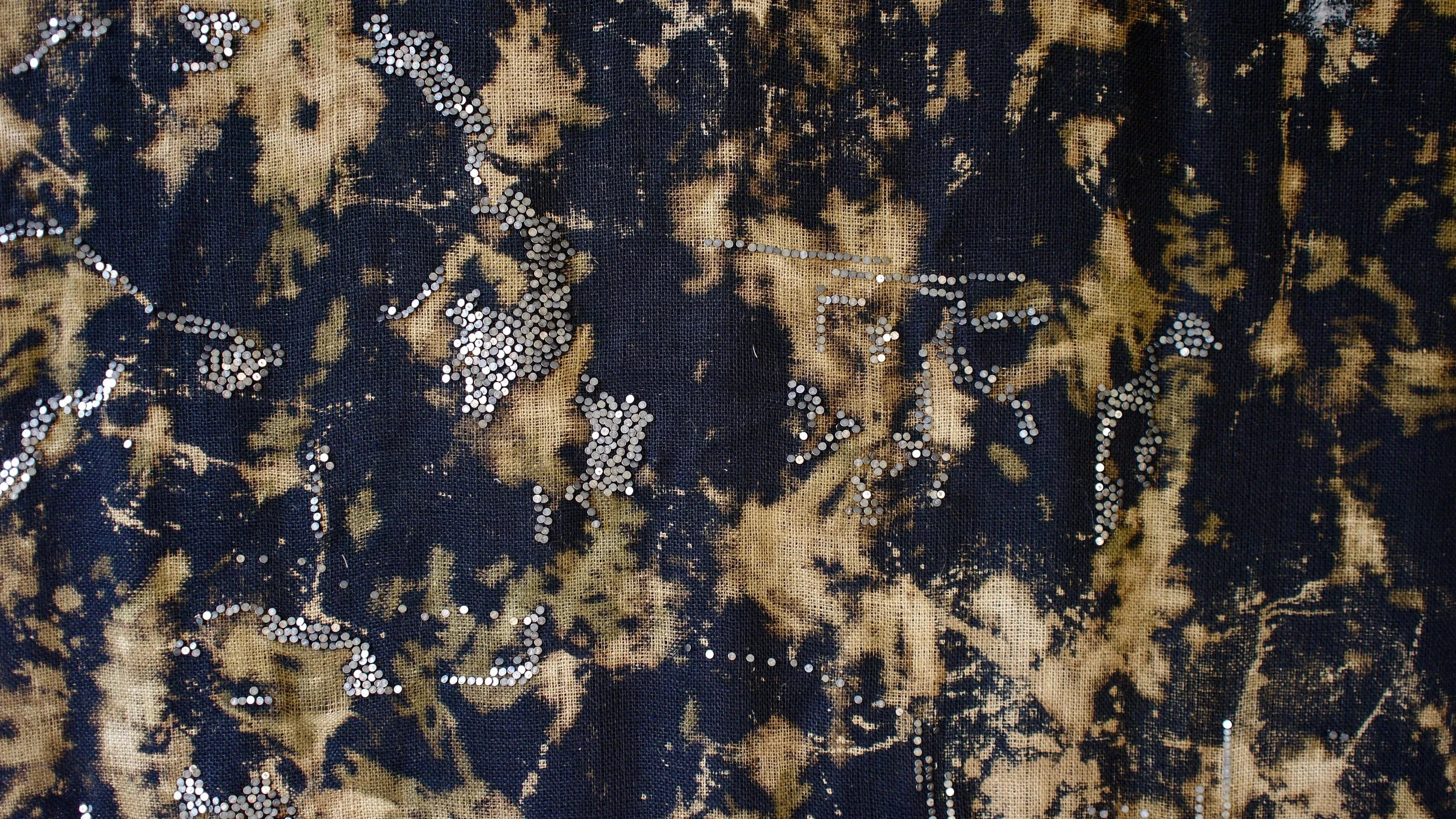
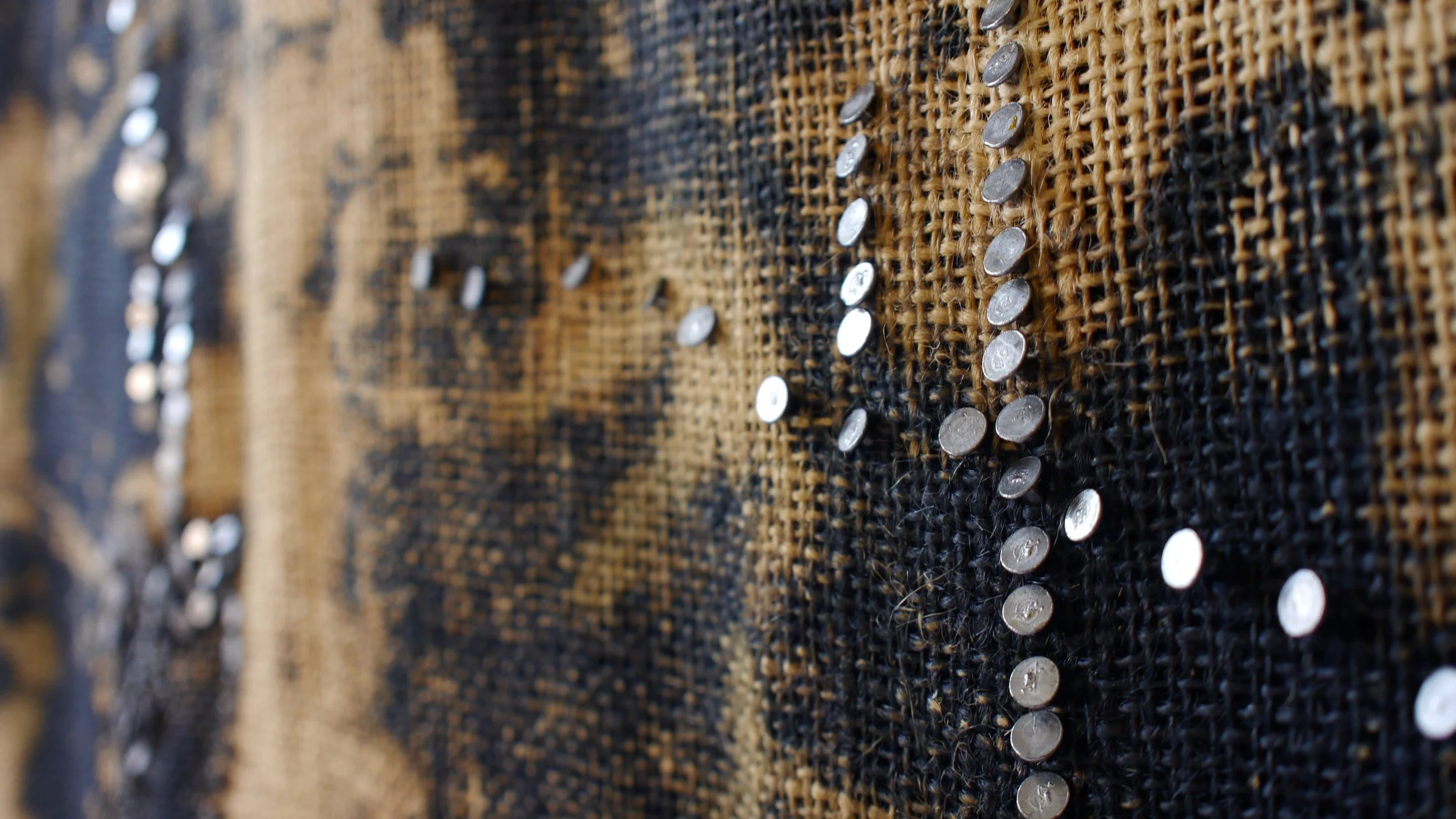
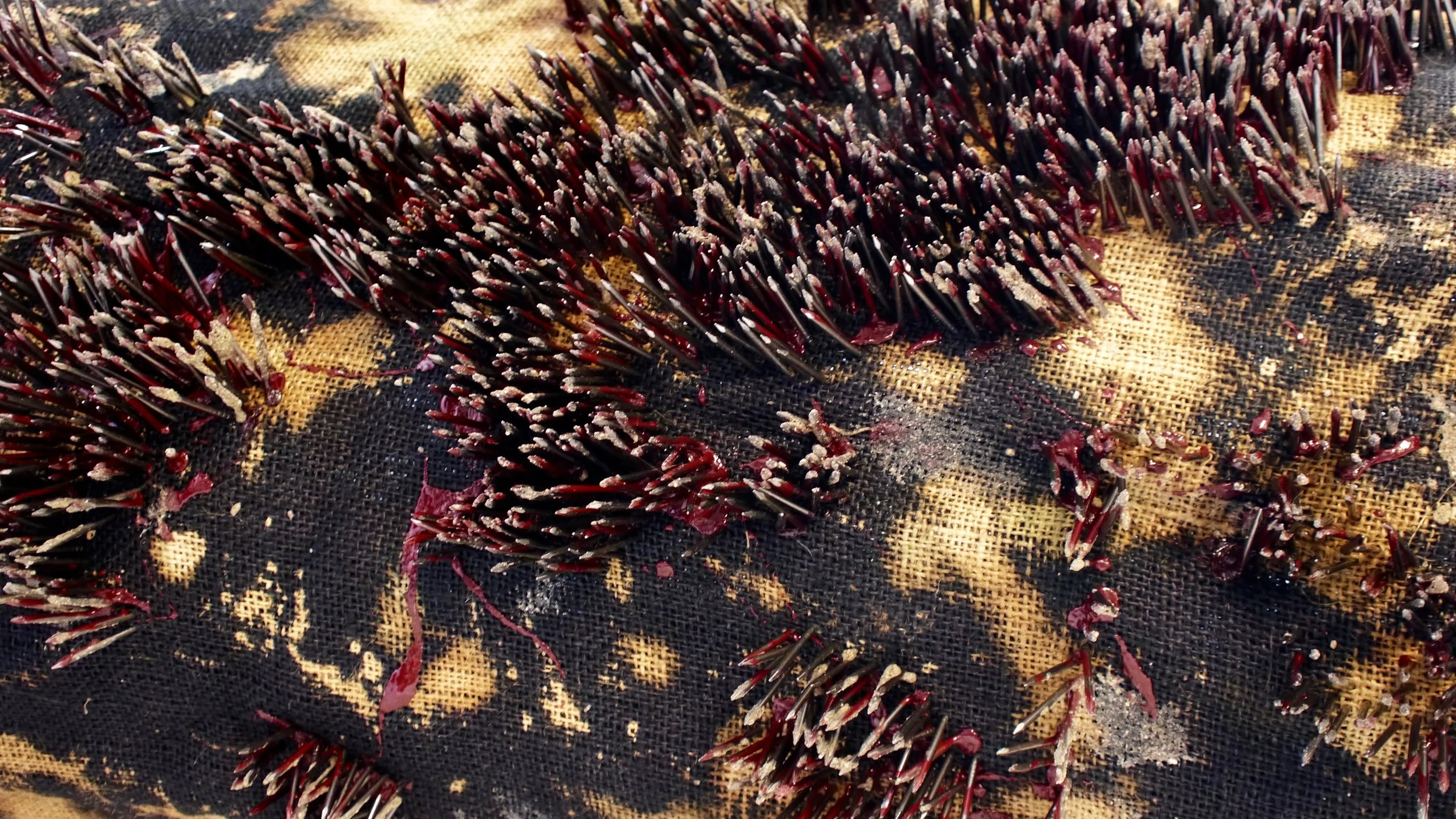
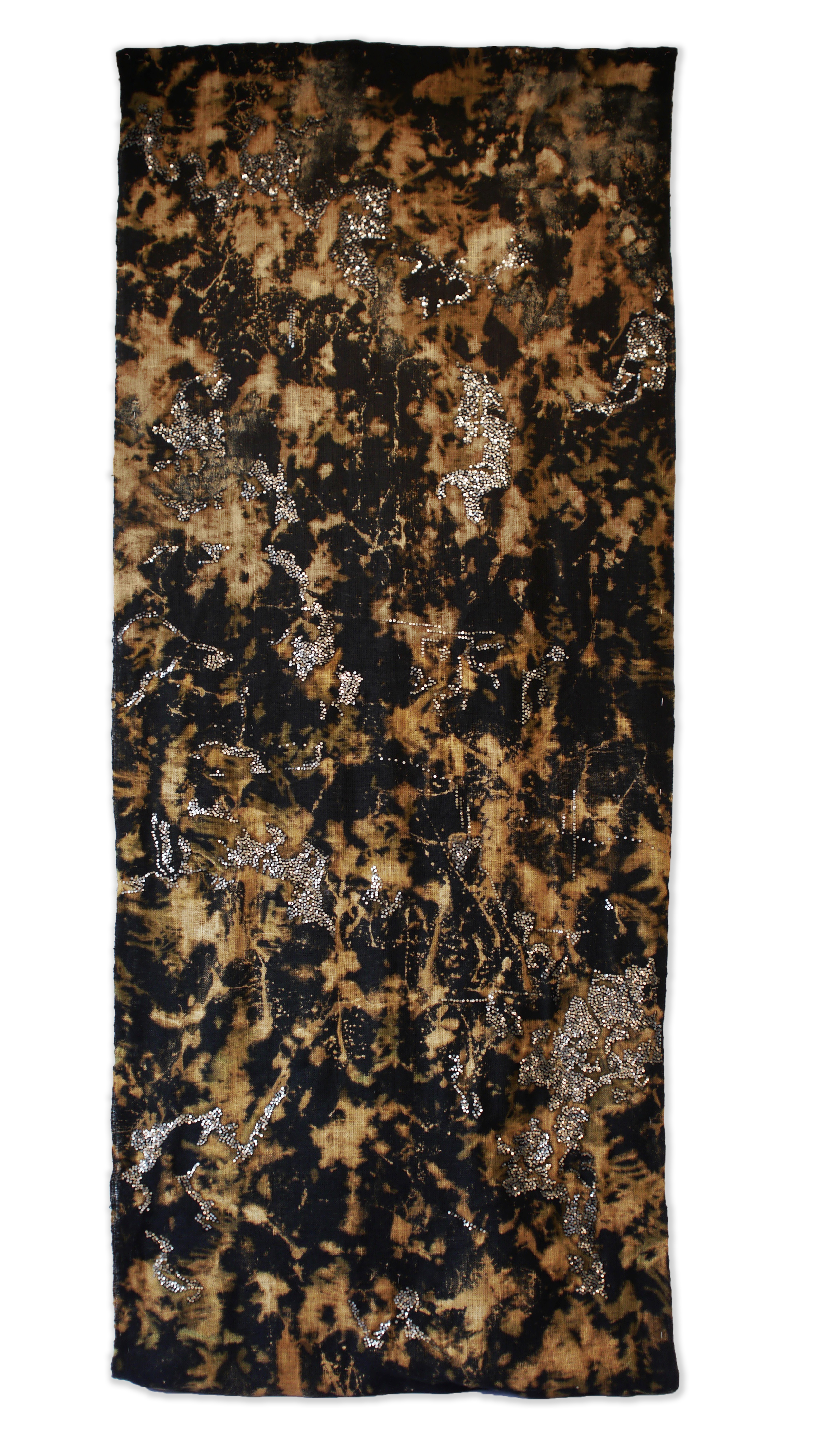
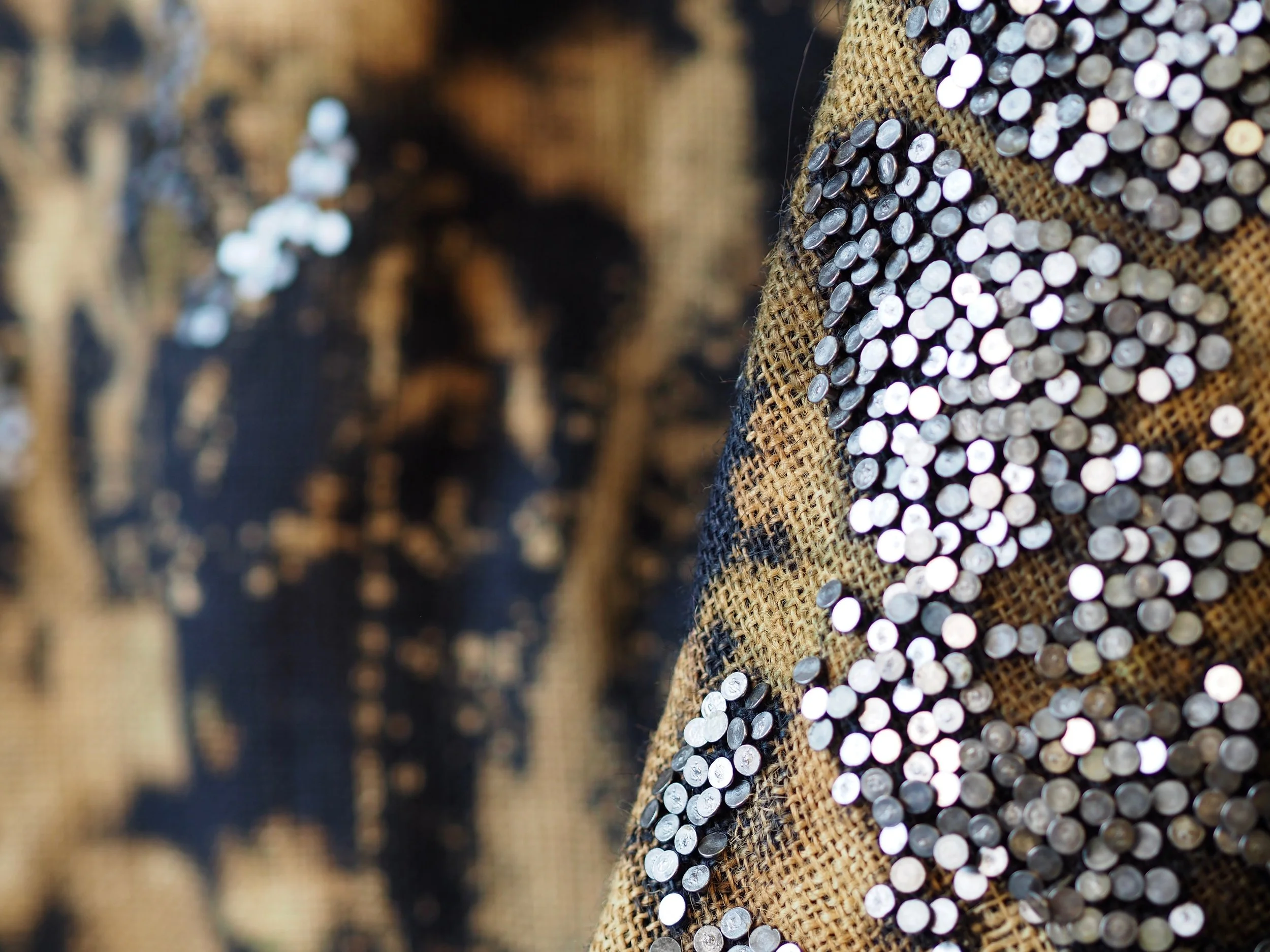
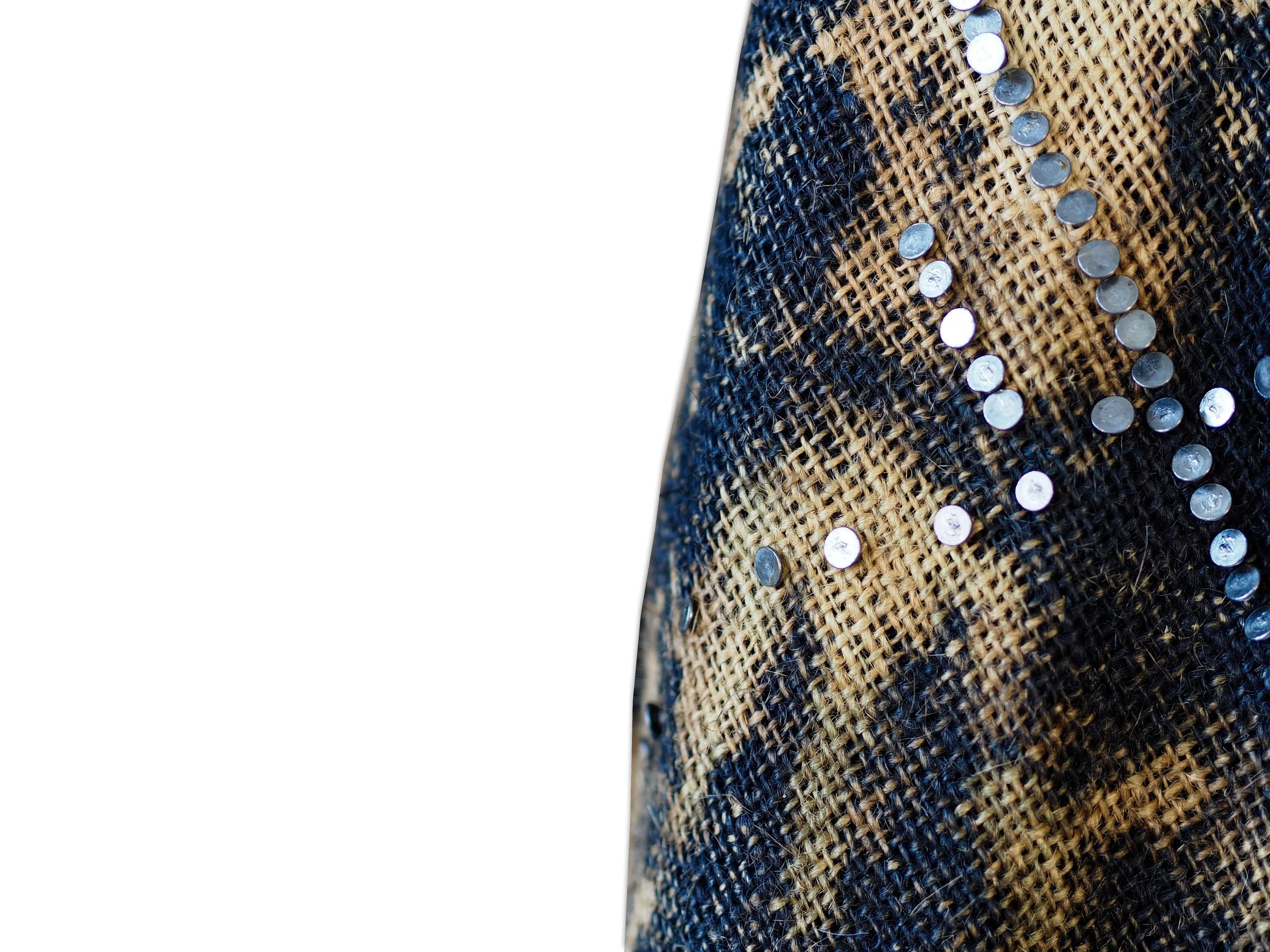
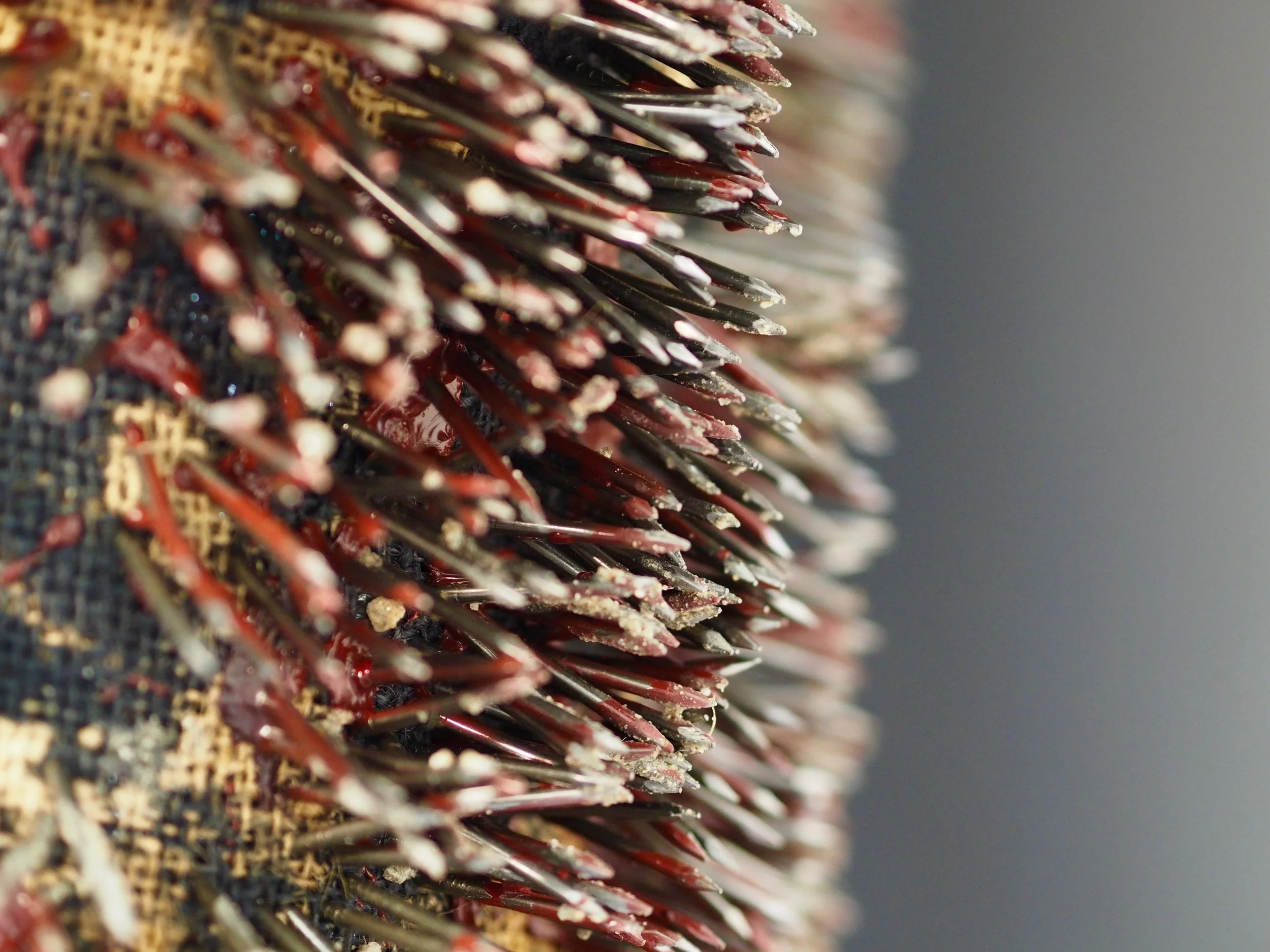
COMBAT, 2016, BURLAP, IRON & SAND (10ft X 4.2ft); Armed forces. Fighting. I am on land. I remember my father’s combat uniform that he would often wear in peace, I think every Friday. The combat uniform too had all the regalia. Decorated with his stars and medals, it looked beautiful. But, there is the other side of the combat, which I have physically not seen. This side is harsh, cruel, and painful. They both have to co-exist just like the nail with a beautiful head and sharp stem These two sides of the nail decorate both sides of the burlap in different ways. Now, I am in space. I see the earth from a distance. I see many fragmented pieces of land. It is dark but the cities are lit up. They all look, more or less, to be a part of the same Earth. Now, I am back on land. I realize they are separate countries. There are borders and boundaries. It is a map.
HIM
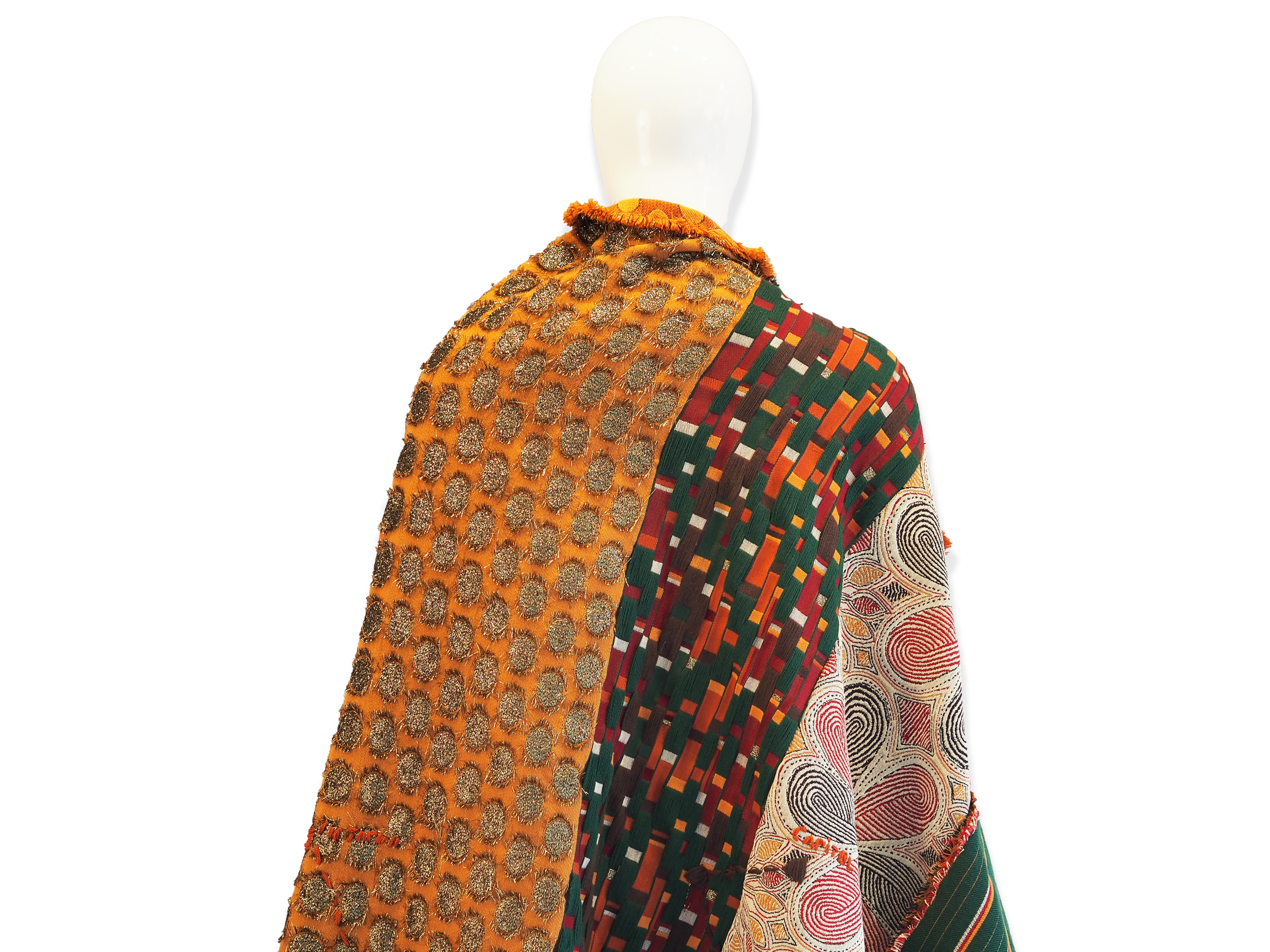
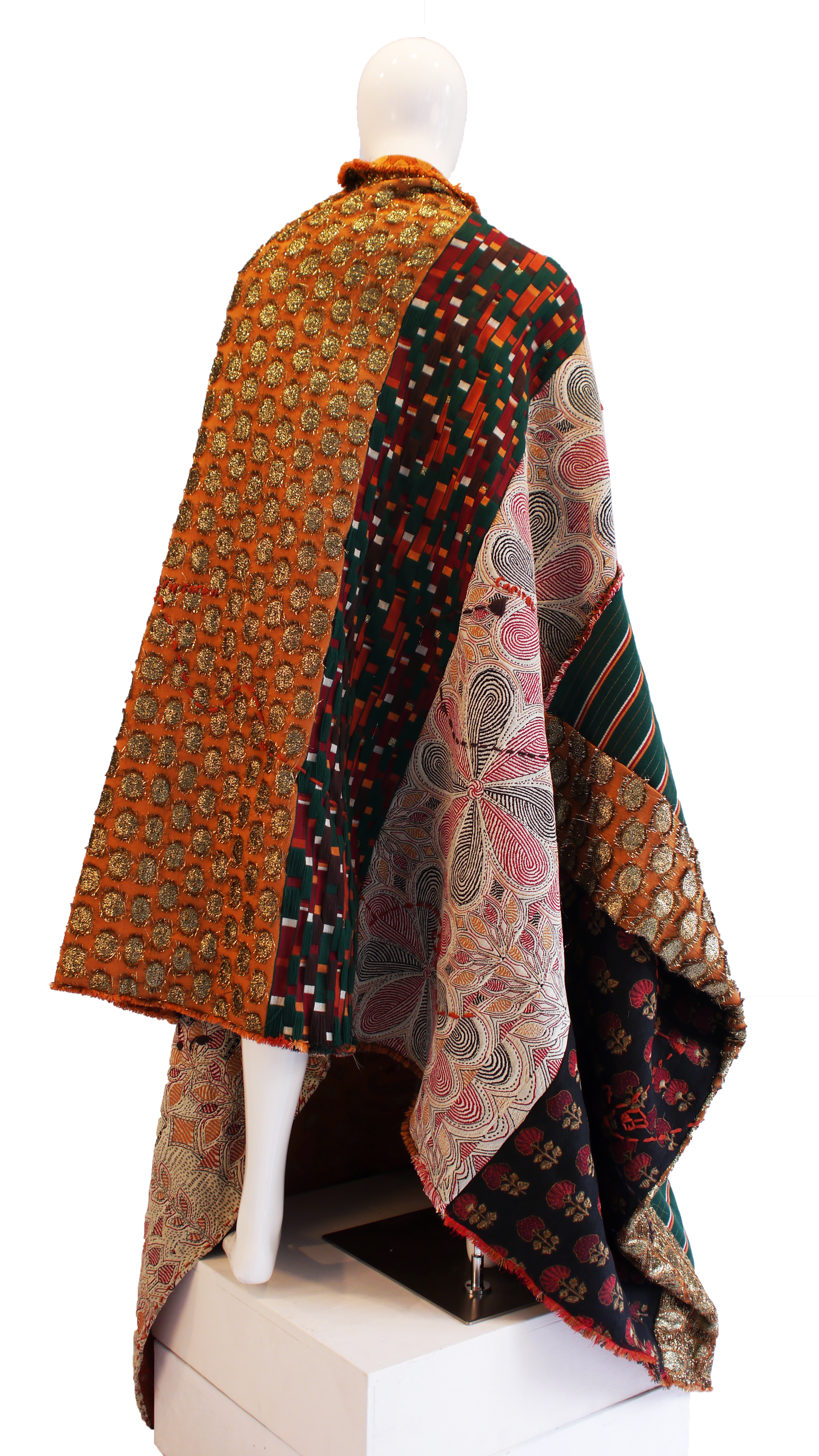
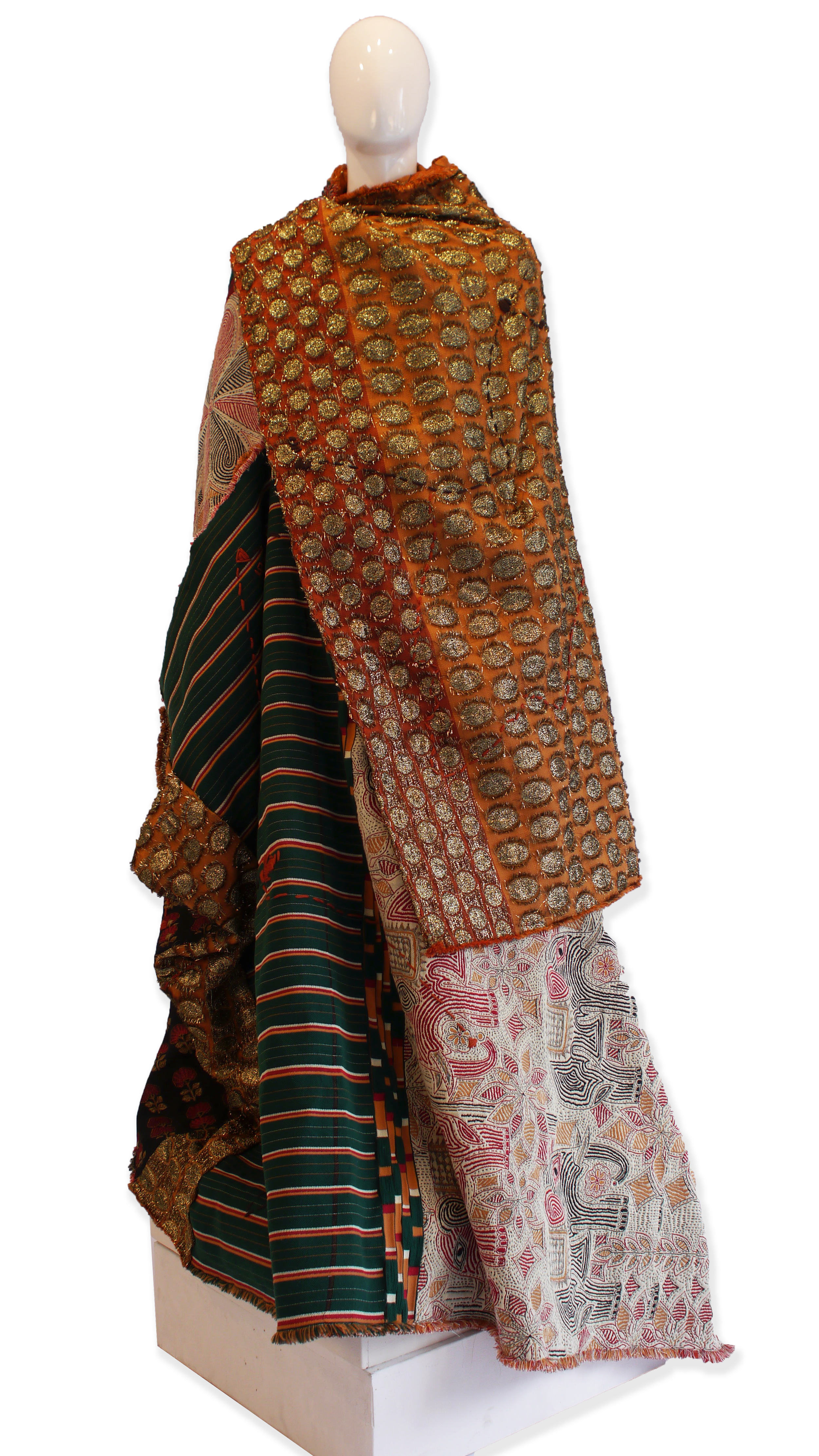
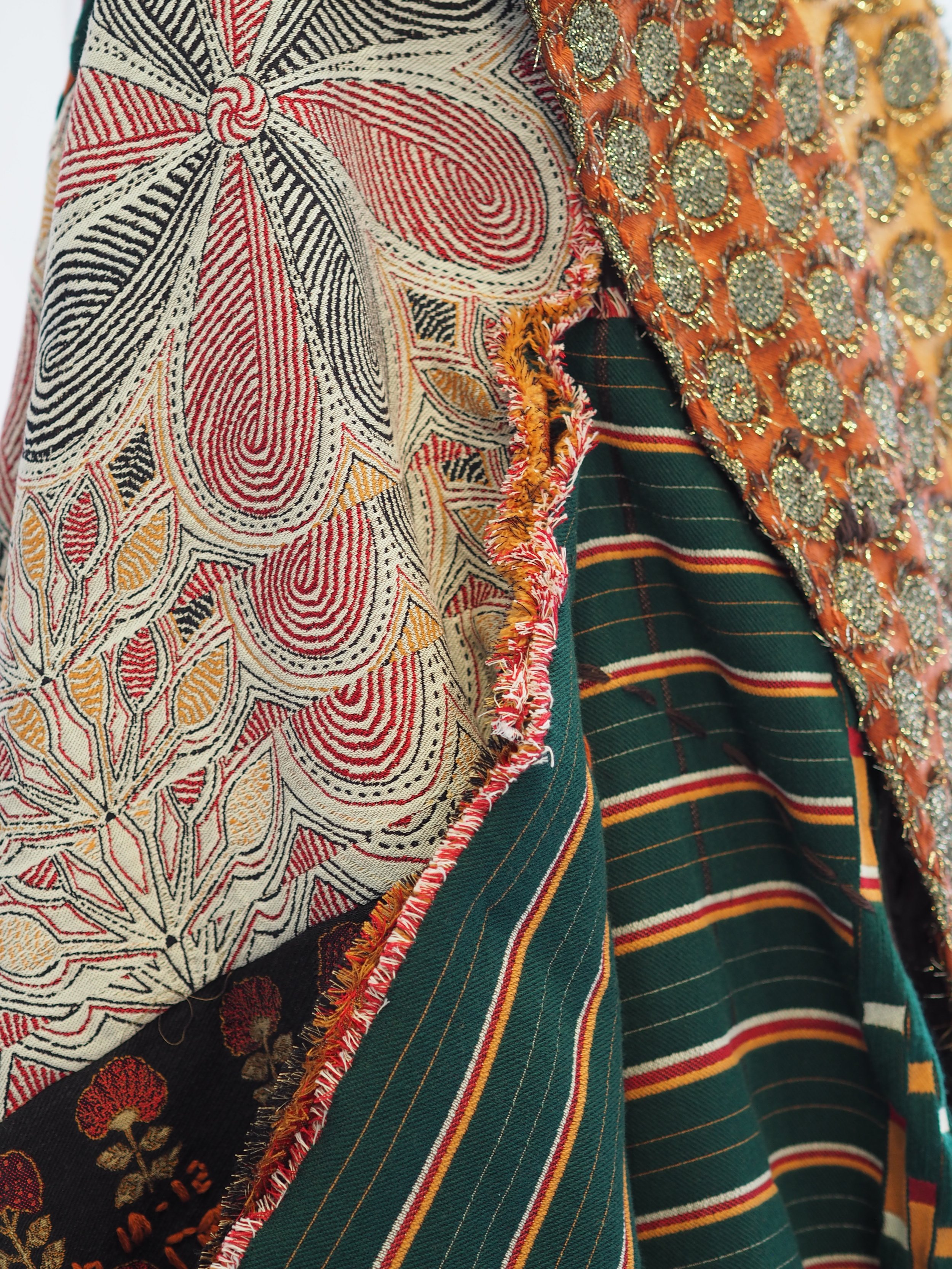
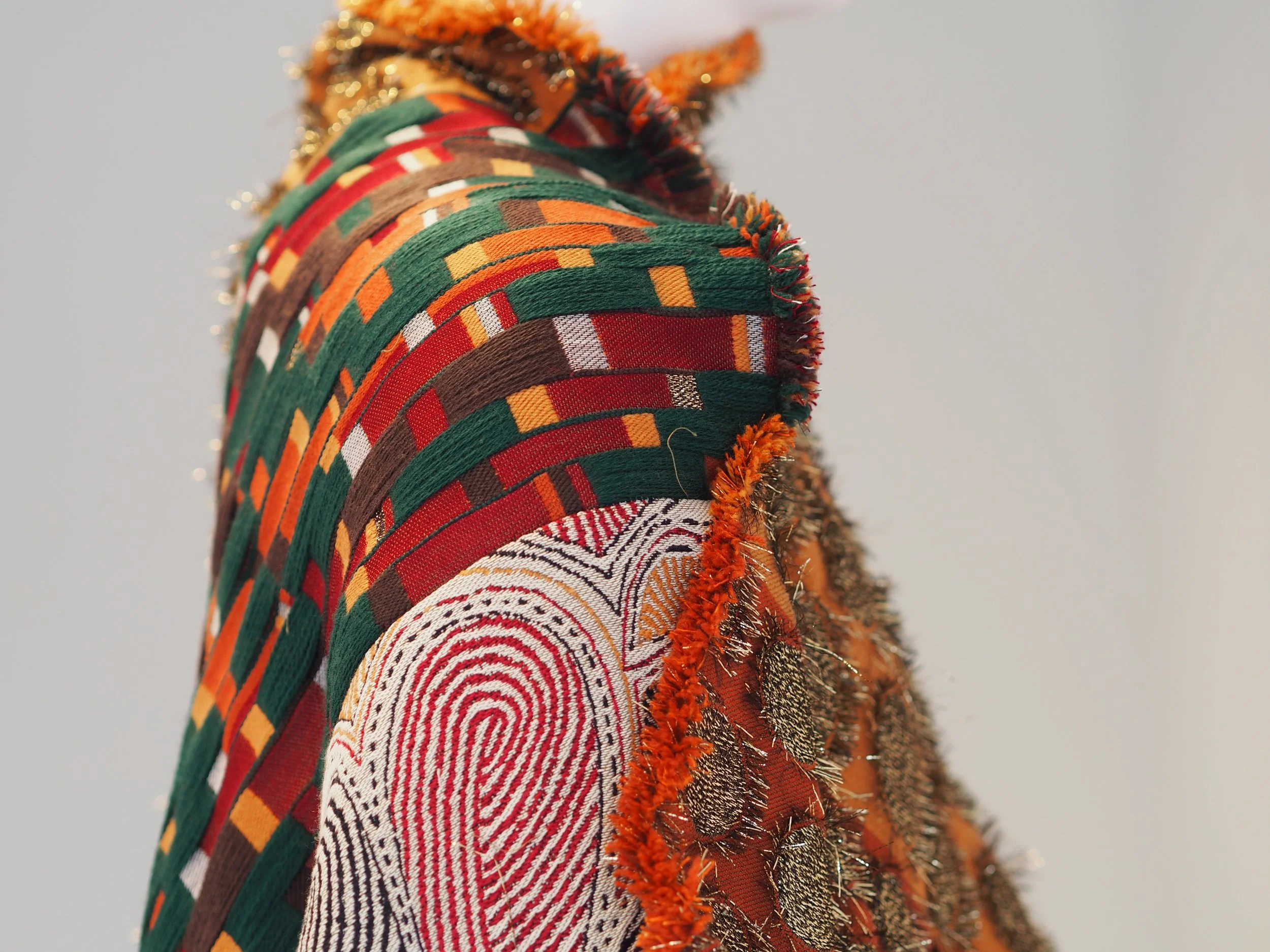
This textile is a shift between regimental and traditional.
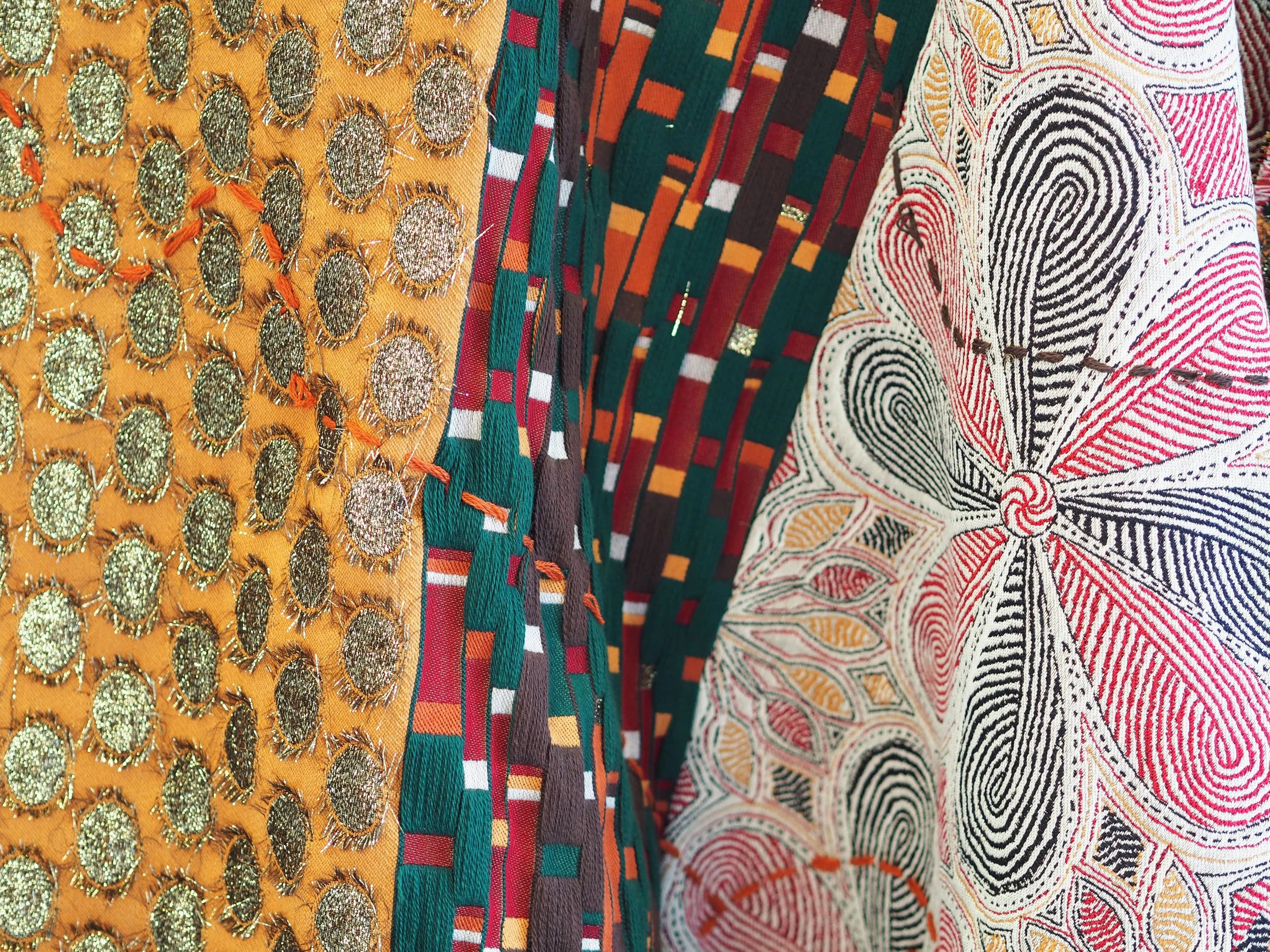
It glorifies the regimental regalia and decorates the fabric with motifs and colors from the different colorful states of India that I have traveled. Regimental or traditional, the elephant has been symbolic in many different aspects of my life. Used widely as a decorative motif in Rajasthan, the state where I come from, I have often seen the elephant motif on wall hangings of my house and on home decor. Parallel to this, I have also seen the Assaye elephant symbol on the badge my father’s beret, shining in brass on his belt, on the uniforms and walls in the Madras regiment area. I shuffle through the traditions of my culture and routines of the regiment. Every new city was a new origin point, a new school, a new set of friends, language, culture, food, roads, and maps. Traveling through various cultures across India, learning about different ways of living and then falling back to the army family was my childhood. This textile is a map of the beautiful story I have lived. It is the journey I have traveled and the symbols I associate with.